 by
by Introduction
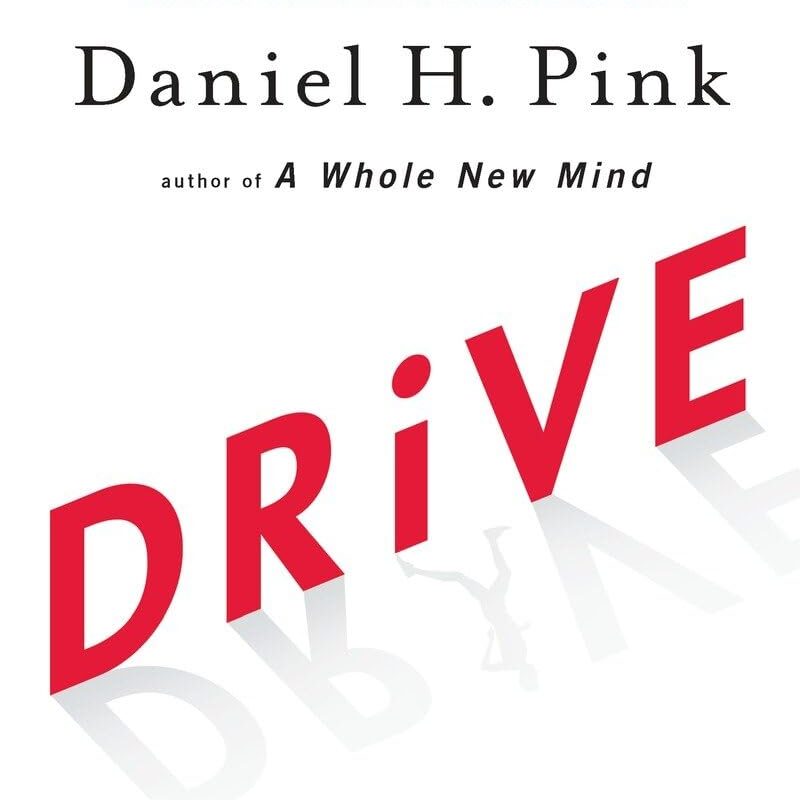
If you’ve ever wondered what truly motivates people—whether in work, learning, or life—then “Drive: The Surprising Truth About What Motivates Us” by Daniel H. Pink is a book that will completely shift your mindset.
In a world where companies still rely on bonuses, rewards, and punishments to boost performance, Pink reveals that true motivation doesn’t come from external rewards—it comes from within. This insight isn’t just philosophical; it’s based on decades of scientific research.
👉 You can grab your copy of Drive by Daniel H. Pink here: Buy it now on Amazon.
Why “Drive” Deserves Your Attention
Daniel H. Pink’s Drive isn’t just another business or self-help book—it’s a blueprint for understanding human behavior and productivity. Pink argues that the traditional “carrot and stick” approach (reward and punishment) is outdated in today’s creative and knowledge-driven world.
Instead, he introduces a new framework for motivation, based on three key elements:
- Autonomy – The desire to direct our own lives.
- Mastery – The urge to get better at something that matters.
- Purpose – The yearning to do what we do in service of something larger than ourselves.
These three pillars are the foundation of what Pink calls Motivation 3.0—a system that goes beyond basic survival instincts and financial incentives.
If you’re a leader, entrepreneur, manager, or educator, understanding these principles can transform how you motivate others—and yourself.
The Evolution of Motivation: From Survival to Purpose
Pink describes three distinct stages of motivation throughout human history:
1. Motivation 1.0 – Survival
In the early days of humanity, motivation was purely biological. People worked to satisfy basic needs like food, safety, and shelter. This is the foundation of all motivation but insufficient for modern life.
2. Motivation 2.0 – Rewards and Punishments
As societies evolved, people began organizing into systems—families, communities, companies. To manage behavior, we used external motivators like rewards (carrots) and punishments (sticks).
This worked well for routine, mechanical tasks—think of factory work or manual labor. However, Pink argues that Motivation 2.0 fails miserably in today’s world, where success depends on creativity, problem-solving, and innovation.
3. Motivation 3.0 – Internal Drive
Today’s economy requires people who are self-directed, innovative, and purpose-driven. That’s where Motivation 3.0 comes in. It’s powered by internal drives like autonomy, mastery, and purpose—the desire to do something because it matters, not just because it pays.
Pink supports this idea with research from psychology and neuroscience, showing how intrinsic motivation leads to higher engagement, better performance, and deeper satisfaction.
Want to understand how to unlock your inner motivation?
👉 Get Daniel H. Pink’s “Drive” here.
Autonomy – The Freedom to Choose Your Path
The first component of Motivation 3.0 is Autonomy—our natural desire to have control over our own lives. Pink explains that when people have the freedom to make choices, they perform better and are more satisfied.
In the modern workplace, autonomy means giving people control over four key aspects:
- Task – What they do
- Time – When they do it
- Technique – How they do it
- Team – With whom they do it
When employees have flexibility in these areas, they feel trusted and empowered. This leads to creativity, responsibility, and innovation—qualities that no external reward can buy.
For example, Google’s famous “20% time” (where employees can spend one day a week working on projects they’re passionate about) has led to products like Gmail and Google News. That’s the power of autonomy in action.
If you’re a manager or entrepreneur, Pink’s advice is clear: stop micromanaging and start empowering your team.
“Control leads to compliance; autonomy leads to engagement.” — Daniel H. Pink
Ready to apply this idea to your own life or workplace?
👉 Get your copy of “Drive” now.
Mastery – The Joy of Getting Better
The second element of Pink’s model is Mastery—the drive to get better at something meaningful.
Think about the times you’ve lost track of time while doing something challenging but enjoyable—whether it’s painting, coding, writing, or even gardening. That state of total focus and immersion is called “flow”, a term coined by psychologist Mihaly Csikszentmihalyi.
Pink argues that mastery isn’t about perfection—it’s about progress. It’s about that continual pursuit of improvement, even when it’s hard.
In his book, Pink lays out three conditions for mastery:
- It’s a mindset: Believing that your abilities can be developed through effort.
- It’s a pain: Mastery requires effort, grit, and persistence.
- It’s an asymptote: You can never fully reach it, but you can always get closer.
Organizations that encourage learning and growth tend to have happier, more engaged employees. Instead of offering bonuses for results, they offer opportunities for skill development, training, and creative freedom.
Want to understand how mastery can transform motivation?
👉 Order “Drive” by Daniel H. Pink on Amazon.
Purpose – The Heart of Motivation
The third and most powerful motivator is Purpose—doing something that matters beyond ourselves.
Pink explains that people want to be part of something bigger than profit or paychecks. Companies like Patagonia, Tesla, and Google have mastered this principle by linking their work to a higher mission—protecting the planet, advancing technology, or improving lives.
Employees at these companies feel they are changing the world, not just collecting salaries. This sense of meaning drives loyalty, creativity, and productivity more effectively than any external incentive.
Purpose is also personal. When you align your life and work with a cause that resonates deeply, you experience fulfillment and flow.
As Pink puts it beautifully:
“The ultimate freedom for creative groups is the freedom to experiment with new ideas.”
Whether you’re leading a business, managing a team, or simply pursuing a personal goal, understanding your purpose is the key to sustainable motivation.
👉 Learn how to find your purpose through “Drive” here.
Why Traditional Motivation No Longer Works
Pink’s Drive dismantles a deeply ingrained myth—that money is the ultimate motivator.
While financial incentives can work for simple, repetitive tasks, they backfire for creative or cognitive work. Studies cited in the book show that rewards can narrow focus, reduce creativity, and even decrease long-term motivation.
In other words, if your goal is to innovate, solve problems, or inspire others, dangling a carrot won’t work. Instead, creating an environment that fosters autonomy, mastery, and purpose will.
This is why many modern organizations are rethinking performance management, incentive systems, and workplace culture.
Real-World Examples from “Drive”
Pink fills his book with fascinating case studies that bring his ideas to life:
- Atlassian, an Australian software company, gives employees a “FedEx Day” to work on any project they like. The result? Some of their most successful innovations.
- Wikipedia thrives on volunteer contributions—proving that people will work for free when they care about the purpose.
- Zappos emphasizes purpose and culture over pay, leading to exceptional customer satisfaction and employee loyalty.
These examples show that the future of work belongs to intrinsically motivated people.
Want to explore these stories in detail?
👉 Get Daniel H. Pink’s “Drive” on Amazon.
How You Can Apply “Drive” in Your Own Life
You don’t have to be a CEO to apply the lessons of Drive. Here’s how you can put Pink’s ideas into practice:
1. Redefine Your Goals
Instead of setting goals based only on money or status, focus on growth, learning, and contribution.
2. Cultivate Autonomy
Find ways to take more control over your time and tasks. Even small freedoms can lead to big motivation boosts.
3. Pursue Mastery
Pick one skill you care about deeply—and commit to improving it every day. The satisfaction of progress will keep you driven.
4. Connect to Purpose
Ask yourself, “Why does this matter?” Understanding your deeper “why” can transform routine work into meaningful action.
5. Build Environments that Encourage Drive
If you’re a leader, give your team trust, challenge, and purpose—not just paychecks.
Who Should Read “Drive”?
- Managers & Leaders who want to inspire teams without relying on bonuses or threats.
- Entrepreneurs seeking to build innovative, motivated startups.
- Educators who want to engage students more effectively.
- Individuals aiming for personal growth, fulfillment, and self-motivation.
If you belong to any of these groups—or simply want to understand what truly drives human behavior—then this book is a must-read.
👉 Buy “Drive” by Daniel H. Pink today and discover the science of lasting motivation.
Final Thoughts: The Future of Motivation
In Drive, Daniel H. Pink doesn’t just talk about motivation—he redefines it. He challenges outdated corporate systems and shows a path forward that’s both scientifically grounded and deeply human.
The takeaway is simple but profound:
“When the profit motive becomes unmoored from the purpose motive, bad things happen.”
If you want to lead a more engaged, creative, and fulfilling life—whether at work or at home—embrace the principles of Autonomy, Mastery, and Purpose.
Because at the end of the day, the real drive comes from within.
👉 Ready to ignite your inner motivation?
Get your copy of Drive: The Surprising Truth About What Motivates Us by Daniel H. Pink here — https://amzn.to/4qzUrJg.
Must-Read Book Summaries You’ll Love
If leadership, mindset, influence, and personal growth fascinate you, don’t stop here. These hand-picked book summaries from our blog dive deeper into psychology, success, motivation, power, and timeless wisdom—each packed with practical takeaways you can use immediately:
Discover the psychology behind why people say “yes” and how ethical persuasion can transform leadership and decision-making.
Learn the life-changing power of seeing the world as it truly is, backed by data, logic, and optimism that reshapes how leaders think.
A deep dive into Daniel H. Pink’s revolutionary ideas on motivation—and why autonomy, mastery, and purpose matter more than rewards.
Explore how vulnerability becomes strength, helping leaders build trust, courage, and wholehearted living in both work and life.
A timeless guide to living in the present moment, reducing stress, and unlocking inner clarity—essential for mindful leadership.
An inside look at the mind of a visionary who is reshaping the future through relentless ambition, innovation, and risk-taking.
A bold exploration of power, politics, and leadership realities, offering lessons that remain surprisingly relevant today.
Master timeless strategies for winning—not just in war, but in business, leadership, and everyday challenges.
Uncover the money lessons schools never taught you, and reshape how you think about wealth, assets, and financial freedom.
The 7 Habits of Highly Effective People by Stephen R. Covey
A classic blueprint for personal effectiveness, leadership excellence, and long-term success that never goes out of style.
- Why Explore These Book Summaries?
- ✔ Quick insights from bestselling books
- ✔ Practical lessons for leadership & growth
- ✔ Easy-to-read, human-written summaries
- ✔ Perfect for lifelong learners & leaders
👉 Bookmark these reads and keep sharpening your leadership edge.
“Start Your Website Journey Today – Exclusive Hostinger Discounts!”

Turn Any Idea into Viral,
Jaw-Dropping AI Videos in Seconds!