 by
by Introduction: Why Communication Is the Skill That Changes Everything
Have you ever walked away from a conversation wishing you had expressed yourself better? Maybe you struggled to explain your ideas clearly during a meeting, misunderstood a loved one, or found yourself at a loss for words in an important discussion.
Communication is one of those invisible skills that quietly shapes every aspect of our lives. It influences our careers, relationships, confidence, and even the opportunities that come our way.
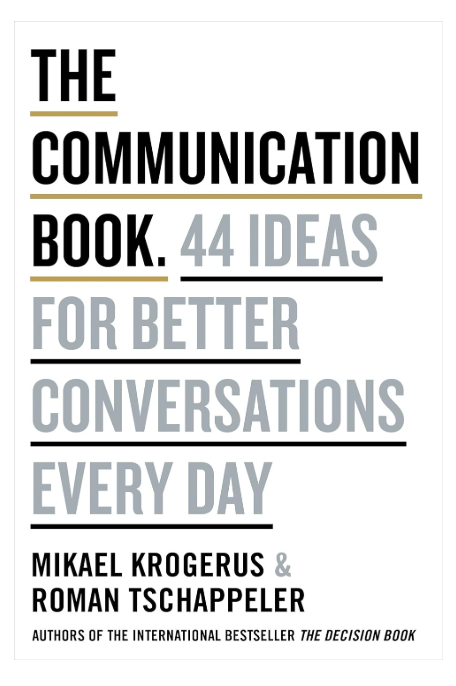
In The Communication Book: 44 Ideas for Better Conversations Every Day, authors Mikael Krogerus and Roman Tschäppeler provide a practical roadmap for mastering communication. Instead of overwhelming readers with complex theories, they present 44 simple yet powerful concepts that can be applied immediately.
Whether you’re a student, professional, entrepreneur, manager, or simply someone who wants better relationships, this book offers valuable insights into how conversations work and how to make them more effective.
If you’re interested in improving your communication skills, you can check out the book here: https://amzn.to/4dVtev6
About the Authors
Mikael Krogerus and Roman Tschäppeler are known for transforming complicated psychological and business concepts into practical frameworks that anyone can understand.
Their writing style is concise, engaging, and highly actionable. Rather than focusing on abstract theories, they emphasize tools and techniques that readers can use in everyday situations.
What Makes This Book Different?
Many communication books spend hundreds of pages discussing theories. This book takes a different approach.
Each chapter introduces a specific communication concept, model, or idea that helps readers understand human interaction more effectively.
The result is a collection of practical tools that can improve:
- Workplace communication
- Leadership conversations
- Public speaking
- Negotiations
- Personal relationships
- Team collaboration
- Conflict resolution
The book serves as a communication toolkit that readers can revisit whenever they encounter a challenging conversation.
1. Listening Is More Powerful Than Talking
One of the most important lessons from the book is that communication begins with listening.
Many people believe communication is about speaking well. In reality, effective communication starts with understanding others.
The authors explain that active listening allows us to:
- Build trust
- Understand emotions
- Gather information
- Avoid misunderstandings
- Create stronger relationships
Great communicators spend more time listening than speaking.
2. Every Conversation Has Hidden Layers
Words represent only a fraction of communication.
People communicate through:
- Tone of voice
- Facial expressions
- Body language
- Timing
- Silence
Often, what remains unsaid carries more meaning than the actual words being spoken.
Understanding these hidden layers helps us interpret conversations more accurately.
3. Ask Better Questions
Questions drive conversations.
The quality of answers often depends on the quality of questions.
Instead of asking:
“Did you like the project?”
Ask:
“What part of the project did you find most valuable?”
Open-ended questions encourage deeper discussion and provide richer insights.
4. Communication Is About Clarity
Many misunderstandings occur because people assume others understand their intentions.
Clear communicators:
- Use simple language
- Avoid unnecessary jargon
- Explain expectations
- Confirm understanding
Complexity creates confusion.
Simplicity creates connection.
5. The Importance of Empathy
Empathy allows us to understand another person’s perspective.
When people feel understood, they become more open, cooperative, and engaged.
Empathy does not require agreement.
It simply requires genuine effort to understand someone else’s viewpoint.
This principle is especially valuable in leadership, customer service, and personal relationships.
6. Nonverbal Communication Matters
Research consistently shows that body language significantly influences how messages are received.
The book highlights the importance of:
- Eye contact
- Posture
- Gestures
- Facial expressions
Your body often speaks before your mouth does.
Being aware of these signals can dramatically improve communication effectiveness.
7. Silence Can Be a Powerful Tool
Many people fear silence.
However, strategic pauses can:
- Encourage reflection
- Create emphasis
- Allow others to speak
- Improve listening
Skilled communicators understand that silence is not awkward.
It is often productive.
8. Understand Different Communication Styles
Not everyone communicates the same way.
Some people prefer facts.
Others focus on emotions.
Some value directness.
Others appreciate diplomacy.
Recognizing these differences helps tailor messages to the audience.
9. Feedback Is a Gift
Constructive feedback is essential for growth.
The authors emphasize that effective feedback should be:
- Specific
- Actionable
- Timely
- Respectful
Vague criticism creates frustration.
Clear feedback creates improvement.
10. Storytelling Makes Messages Memorable
Facts inform.
Stories inspire.
People naturally remember stories better than statistics.
Whether you’re leading a team, giving a presentation, or sharing an idea, storytelling can make your message more engaging and persuasive.
11. Build Trust Through Consistency
Trust is the foundation of effective communication.
People trust individuals whose words and actions align.
Trust grows when we:
- Keep promises
- Communicate honestly
- Admit mistakes
- Show reliability
Without trust, even the best communication techniques lose effectiveness.
12. Conflict Can Be Constructive
Many people avoid conflict.
The book suggests that healthy conflict can actually improve relationships and decision-making.
The key is focusing on:
- Issues instead of personalities
- Understanding instead of winning
- Solutions instead of blame
Handled correctly, disagreements can strengthen communication.
13. Emotional Intelligence Improves Conversations
Understanding emotions is a critical communication skill.
Emotional intelligence involves:
- Self-awareness
- Self-control
- Empathy
- Social awareness
People who manage emotions effectively often become stronger communicators and leaders.
14. Adapt Your Message to Your Audience
A message that works for one audience may fail with another.
Successful communicators adjust their approach based on:
- Knowledge level
- Interests
- Needs
- Expectations
Audience awareness increases communication impact.
15. Simplicity Wins
One recurring theme throughout the book is simplicity.
Complicated explanations rarely create understanding.
Simple explanations often do.
The best communicators make difficult ideas easy to understand.
Practical Ways to Apply the Book’s Lessons
Reading about communication is valuable.
Applying the lessons is transformative.
Here are practical ways to use the book’s ideas:
At Work
- Listen actively during meetings.
- Ask thoughtful questions.
- Give constructive feedback.
- Simplify presentations.
- Build stronger relationships with colleagues.
In Relationships
- Practice empathy.
- Avoid interrupting.
- Focus on understanding.
- Express appreciation regularly.
- Resolve conflicts respectfully.
In Leadership
- Communicate expectations clearly.
- Encourage open dialogue.
- Create psychological safety.
- Listen before making decisions.
- Use storytelling to inspire teams.
Who Should Read This Book?
This book is ideal for:
- Students
- Managers
- Entrepreneurs
- Team leaders
- Public speakers
- Sales professionals
- Teachers
- Parents
In short, anyone who interacts with people can benefit from its lessons.
Since communication affects nearly every area of life, the book offers universal value.
Interested in reading the full book? You can find it here: https://amzn.to/4dVtev6
Key Takeaways from The Communication Book
Here are some of the most valuable lessons:
✔ Listening matters more than speaking.
✔ Great questions lead to better conversations.
✔ Empathy strengthens relationships.
✔ Body language influences communication.
✔ Simplicity improves understanding.
✔ Feedback fuels growth.
✔ Storytelling makes messages memorable.
✔ Trust is the foundation of influence.
✔ Emotional intelligence enhances communication.
✔ Every conversation is an opportunity to connect.
Final Thoughts
The Communication Book: 44 Ideas for Better Conversations Every Day is a practical, insightful, and highly accessible guide to one of life’s most important skills.
Rather than presenting communication as a talent reserved for a gifted few, Mikael Krogerus and Roman Tschäppeler demonstrate that effective communication is a skill anyone can develop.
The book’s greatest strength lies in its simplicity. Each idea is easy to understand, easy to remember, and easy to apply.
In a world filled with constant messages, notifications, and distractions, the ability to communicate clearly and genuinely has never been more valuable.
If you’re looking for one of the best communication skills books available today, this book deserves a place on your reading list.
Get your copy today and start improving your conversations: https://amzn.to/4dVtev6
Better conversations lead to better relationships, stronger careers, and a more meaningful life. Sometimes, a single conversation can change everything.
Must-Read Book Summaries You’ll Love
If leadership, mindset, influence, and personal growth fascinate you, don’t stop here. These hand-picked book summaries from our blog dive deeper into psychology, success, motivation, power, and timeless wisdom—each packed with practical takeaways you can use immediately:
Discover the psychology behind why people say “yes” and how ethical persuasion can transform leadership and decision-making.
Learn the life-changing power of seeing the world as it truly is, backed by data, logic, and optimism that reshapes how leaders think.
A deep dive into Daniel H. Pink’s revolutionary ideas on motivation—and why autonomy, mastery, and purpose matter more than rewards.
Explore how vulnerability becomes strength, helping leaders build trust, courage, and wholehearted living in both work and life.
A timeless guide to living in the present moment, reducing stress, and unlocking inner clarity—essential for mindful leadership.
An inside look at the mind of a visionary who is reshaping the future through relentless ambition, innovation, and risk-taking.
A bold exploration of power, politics, and leadership realities, offering lessons that remain surprisingly relevant today.
Master timeless strategies for winning—not just in war, but in business, leadership, and everyday challenges.
Uncover the money lessons schools never taught you, and reshape how you think about wealth, assets, and financial freedom.
The 7 Habits of Highly Effective People by Stephen R. Covey
A classic blueprint for personal effectiveness, leadership excellence, and long-term success that never goes out of style.
- Why Explore These Book Summaries?
- ✔ Quick insights from bestselling books
- ✔ Practical lessons for leadership & growth
- ✔ Easy-to-read, human-written summaries
- ✔ Perfect for lifelong learners & leaders
👉 Bookmark these reads and keep sharpening your leadership edge.
“Start Your Website Journey Today – Exclusive Hostinger Discounts!”