 by
by Why Your Brain Keeps Sabotaging Your Best Intentions
Have you ever promised yourself that you’ll wake up early, exercise regularly, stop scrolling endlessly on social media, or finally complete that important project, only to find yourself doing the exact opposite?
You’re not alone.
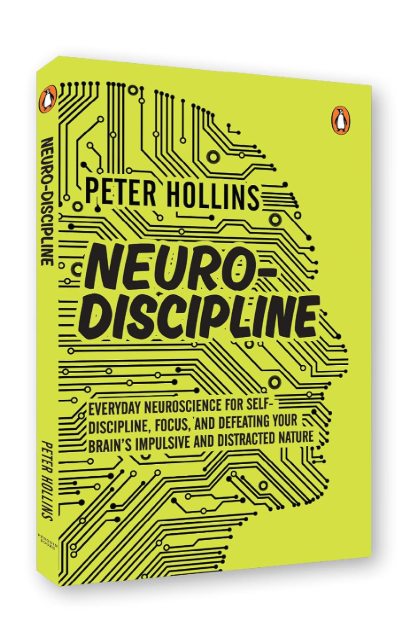
The truth is that self-discipline isn’t simply about willpower. According to Peter Hollins in Neuro-Discipline: Everyday Neuroscience for Self-Discipline, Focus, and Defeating Your Brain’s Impulsive and Distracted Nature, our brains are biologically wired to seek comfort, immediate rewards, and energy conservation.
This fascinating book explores the neuroscience behind self-control, focus, procrastination, and habit formation. Rather than relying on motivational slogans, Hollins dives into scientific research to explain why discipline feels difficult and how we can train our brains to make productive behaviors automatic.
If you’re looking to improve concentration, overcome procrastination, and develop lasting self-discipline, this book offers practical, science-backed solutions.
👉 Get your copy here: https://amzn.to/4uOvRWQ
What Is Neuro-Discipline?
Neuro-Discipline combines neuroscience, psychology, and behavioral science to explain why humans struggle with focus and consistency.
Peter Hollins argues that most people misunderstand discipline. They think disciplined individuals possess extraordinary willpower. In reality, highly disciplined people design environments, routines, and systems that reduce the need for willpower altogether.
The central message of the book is simple:
Your brain can be trained.
Through repeated actions and strategic behavioral changes, you can rewire neural pathways that support focus, productivity, and self-control.
Why Your Brain Loves Instant Gratification
One of the most valuable lessons in the book is understanding the brain’s reward system.
Our ancestors survived because their brains prioritized immediate rewards. Finding food, seeking safety, and conserving energy were essential for survival.
Unfortunately, modern life presents countless artificial rewards:
- Social media notifications
- Streaming platforms
- Video games
- Online shopping
- Junk food
- Endless entertainment
These activities trigger dopamine release, making them highly attractive.
The problem?
Long-term goals such as studying, exercising, investing, or building a business often provide delayed rewards.
Your brain naturally gravitates toward what feels good now rather than what benefits you later.
Understanding this biological tendency is the first step toward mastering self-discipline.
The Neuroscience of Focus
Focus has become one of the most valuable skills in today’s attention economy.
According to Hollins, every distraction comes with a cognitive cost. Each time you switch tasks, your brain requires time and energy to regain momentum.
This phenomenon, often called “attention residue,” makes multitasking far less efficient than people assume.
Practical Strategies for Better Focus
1. Single-Task Relentlessly
The brain performs best when concentrating on one task at a time.
Instead of:
- Checking emails
- Responding to messages
- Working on projects
- Browsing social media
Choose one important task and focus exclusively on it.
2. Remove Temptations
Discipline becomes easier when temptations disappear.
Examples include:
- Turning off notifications
- Blocking distracting websites
- Keeping your phone out of sight
- Creating a dedicated workspace
3. Use Time Blocks
Working in structured blocks trains your brain to expect periods of intense concentration.
A simple method:
- 50 minutes focused work
- 10 minutes recovery
Over time, your attention span improves significantly.
Why Motivation Is Overrated
One of the strongest messages in Neuro-Discipline is that motivation is unreliable.
Most people wait until they “feel motivated” before taking action.
The problem is motivation fluctuates constantly.
Disciplined people reverse the process.
They take action first.
Action creates momentum.
Momentum creates motivation.
This insight can completely transform your productivity.
When you don’t feel like exercising, start with five minutes.
When you don’t feel like writing, write one paragraph.
Small actions activate the brain’s momentum mechanisms and make continued effort easier.
The Hidden Science of Habit Formation
Habits are essentially neurological shortcuts.
When a behavior is repeated consistently, neural pathways strengthen.
Eventually, the behavior requires less conscious effort.
This is why brushing your teeth feels automatic.
The same process can be applied to:
- Reading
- Exercise
- Meditation
- Writing
- Studying
- Saving money
The Habit Loop
Hollins discusses the habit loop:
- Cue
- Routine
- Reward
For example:
Cue: Morning coffee
Routine: Reading 10 pages
Reward: Satisfaction and progress
Repeating this loop strengthens the behavior until it becomes automatic.
How to Defeat Procrastination
Procrastination isn’t laziness.
It’s often an emotional regulation problem.
People avoid tasks because they trigger:
- Anxiety
- Uncertainty
- Fear of failure
- Perfectionism
- Mental discomfort
The brain seeks relief from these uncomfortable emotions.
Scrolling social media provides immediate emotional relief, even though it damages long-term goals.
The 5-Minute Rule
One of the simplest solutions discussed in the book is starting small.
Tell yourself:
“I only need to work on this for five minutes.”
Once started, resistance often disappears.
The hardest part is usually beginning.
The Power of Environment Design
Many people believe self-control happens internally.
However, Hollins emphasizes that environment often determines behavior.
Consider these examples:
- A bowl of candy on your desk increases snacking.
- A phone beside your bed encourages scrolling.
- Running shoes near the door encourage exercise.
- A book on your pillow encourages reading.
Successful people don’t merely rely on discipline.
They build environments that support disciplined choices.
Decision Fatigue: The Silent Productivity Killer
Your brain has limited decision-making resources.
Every decision consumes mental energy.
Examples include:
- What to wear
- What to eat
- What task to start
- When to exercise
By the end of the day, mental resources become depleted.
This is called decision fatigue.
The solution?
Create routines.
Routines eliminate unnecessary decisions and preserve mental energy for important work.
This explains why many high performers simplify daily choices.
Building Mental Toughness Through Discomfort
Growth rarely occurs inside comfort zones.
Neuro-Discipline highlights the importance of deliberately practicing discomfort.
Examples include:
- Taking cold showers
- Exercising regularly
- Waking up earlier
- Having difficult conversations
- Learning challenging skills
Each act of controlled discomfort strengthens neural circuits associated with self-control.
Think of discipline as a mental muscle.
The more it’s exercised, the stronger it becomes.
The Role of Dopamine in Self-Discipline
Dopamine is often misunderstood.
People think dopamine creates pleasure.
In reality, dopamine primarily drives anticipation and motivation.
Modern technology constantly hijacks this system.
Every notification creates anticipation.
Every scroll promises novelty.
Every click offers potential reward.
The result is a brain conditioned for distraction.
To regain control:
- Reduce unnecessary digital stimulation.
- Schedule technology-free periods.
- Focus on meaningful rewards.
- Practice delayed gratification.
These habits retrain the brain’s reward system.
The Compound Effect of Small Improvements
One of the most inspiring lessons from the book is that tiny improvements accumulate.
You don’t need dramatic transformations.
Improving by just 1% daily creates extraordinary long-term results.
Examples:
- Reading 10 pages daily
- Exercising 20 minutes daily
- Saving a small amount monthly
- Practicing a skill consistently
Small actions repeated over time create remarkable outcomes.
Discipline is less about intensity and more about consistency.
Practical Neuro-Discipline Strategies You Can Start Today
Here are actionable techniques inspired by Peter Hollins:
Morning Focus Ritual
Begin each day with your most important task before checking social media.
Use Friction Strategically
Make bad habits harder.
Examples:
- Delete distracting apps.
- Log out of social media accounts.
- Keep snacks out of reach.
Track Your Habits
Monitoring progress increases accountability.
Focus on Systems
Instead of obsessing over goals, build daily systems that naturally produce results.
Reward Consistency
Celebrate showing up, not perfection.
Who Should Read Neuro-Discipline?
This book is ideal for:
- Students struggling with focus
- Professionals facing distractions
- Entrepreneurs building productive habits
- Anyone fighting procrastination
- Individuals interested in neuroscience
- Personal development enthusiasts
If you’ve ever wondered why discipline feels difficult despite strong intentions, this book provides scientific answers and practical solutions.
👉 Grab your copy here: https://amzn.to/4uOvRWQ
Final Thoughts
Neuro-Discipline by Peter Hollins delivers a refreshing perspective on self-control, focus, and productivity.
Rather than treating discipline as a personality trait, Hollins demonstrates that it is a trainable skill rooted in neuroscience.
The book reveals that success isn’t about possessing extraordinary willpower. It’s about understanding how the brain works and creating systems that make productive behavior easier and impulsive behavior harder.
Whether your goal is better concentration, stronger habits, improved productivity, or greater self-control, the lessons in this book provide a practical roadmap.
The most powerful takeaway is simple:
Your brain is not your enemy. It is a system that can be trained.
Master that system, and you can transform nearly every area of your life.
Recommended Reading
If you’re serious about improving focus, defeating procrastination, and building lasting self-discipline, Neuro-Discipline deserves a place on your reading list.
👉 Buy the book now: https://amzn.to/4uOvRWQ
Must-Read Book Summaries You’ll Love
If leadership, mindset, influence, and personal growth fascinate you, don’t stop here. These hand-picked book summaries from our blog dive deeper into psychology, success, motivation, power, and timeless wisdom—each packed with practical takeaways you can use immediately:
Discover the psychology behind why people say “yes” and how ethical persuasion can transform leadership and decision-making.
Learn the life-changing power of seeing the world as it truly is, backed by data, logic, and optimism that reshapes how leaders think.
A deep dive into Daniel H. Pink’s revolutionary ideas on motivation—and why autonomy, mastery, and purpose matter more than rewards.
Explore how vulnerability becomes strength, helping leaders build trust, courage, and wholehearted living in both work and life.
A timeless guide to living in the present moment, reducing stress, and unlocking inner clarity—essential for mindful leadership.
An inside look at the mind of a visionary who is reshaping the future through relentless ambition, innovation, and risk-taking.
A bold exploration of power, politics, and leadership realities, offering lessons that remain surprisingly relevant today.
Master timeless strategies for winning—not just in war, but in business, leadership, and everyday challenges.
Uncover the money lessons schools never taught you, and reshape how you think about wealth, assets, and financial freedom.
The 7 Habits of Highly Effective People by Stephen R. Covey
A classic blueprint for personal effectiveness, leadership excellence, and long-term success that never goes out of style.
- Why Explore These Book Summaries?
- ✔ Quick insights from bestselling books
- ✔ Practical lessons for leadership & growth
- ✔ Easy-to-read, human-written summaries
- ✔ Perfect for lifelong learners & leaders
👉 Bookmark these reads and keep sharpening your leadership edge.
“Start Your Website Journey Today – Exclusive Hostinger Discounts!”