 by
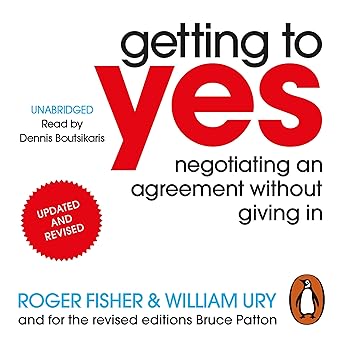
by If you’ve ever found yourself stuck in a heated argument, struggling to convince someone, or trying to avoid unnecessary conflict — “Getting to Yes” by Roger Fisher, William Ury, and Bruce Patton is that one book you wish you had read earlier.
This bestselling negotiation classic is more than a strategy manual — it’s a mindset shift. A way of seeing people, conflicts, and solutions differently. And the best thing? Anyone can apply these methods — students, professionals, entrepreneurs, or even parents dealing with stubborn toddlers.
If you haven’t grabbed a copy yet, check it out here: 👉 Get the book on Amazon.
In this detailed review, we’ll walk through:
- Why Getting to Yes became a global negotiation bible
- The core principles of principled negotiation
- Real-life examples showing how these methods work
- Powerful takeaways you can start using today
- And whether this book is worth buying in 2025
Let’s dive in.
Why “Getting to Yes” Still Matters Today
Published decades ago, Getting to Yes remains the most recommended book in business schools, corporate training programs, and leadership workshops. And for good reason.
Where other negotiation books emphasize winning the argument, this one focuses on winning the relationship, winning clarity, and winning long-term outcomes.
In a world overflowing with opinions, personal egos, and high-pressure decisions, Fisher, Ury, and Patton teach something refreshingly different:
“Negotiation is not about defeating the other person — it’s about getting both sides to walk away satisfied.”
This idea alone has transformed countless careers.
Whether you’re discussing a raise, handling clients, closing a deal, or resolving family conflicts — the book provides a simple, actionable framework anyone can follow.
You can get your copy here: 👉 Getting to Yes on Amazon.
What Is Principled Negotiation?
The authors introduce a revolutionary method called Principled Negotiation, which focuses on interests, not positions.
Let’s simplify this.
Positions vs Interests
- A position is what someone says they want.
- An interest is why they want it.
For example:
Position: “I want a higher salary.”
Interest: “I need financial stability, recognition, and growth.”
When you dig into interests, you discover opportunities for creative solutions.
This shift alone can turn arguments into productive discussions.
H2: The Four Pillars of “Getting to Yes”
The book outlines 4 powerful principles that guide every successful negotiation.
Let’s break them down in a conversational, easy-to-understand way.
1. Separate the People from the Problem
Humans come with emotions, fears, misunderstandings, memories, and biases.
Negotiations fail not because the problem is impossible, but because people take things personally.
In fact, we often react to how someone speaks instead of what they say.
The authors emphasize three key relationship elements:
a) Perception
We assume we understand what the other person means.
But our assumptions usually make negotiation worse.
b) Emotion
Strong emotions can derail conversations.
Learning to recognize and acknowledge emotions (not suppress them) makes negotiation smoother.
c) Communication
Most conflicts arise because people talk at each other, not with each other.
Listening is more powerful than talking.
This principle encourages us to treat the other person like a partner — not an enemy.
2. Focus on Interests, Not Positions
If you take only one thing from this blog, let it be this:
Positions divide people, interests unite them.
When you focus on why someone wants something, rather than what they say they want, solutions become easier.
Real Example
Two children fight over an orange.
Position:
- Child A: “I want the orange.”
- Child B: “No, I want it.”
Interest:
- A wants the juice.
- B wants the peel for baking.
Solution?
Give both of them exactly what they want — without compromise.
Understanding interests builds bridges instead of walls.
3. Invent Options for Mutual Gain
Here comes the fun part.
Negotiation doesn’t have to be rigid or boring.
The authors encourage creativity.
Instead of asking:
❌ “Who will win?”
Ask this:
✔️ “How can we both win?”
Most people see negotiation as a tug-of-war.
But there’s almost always a way for both sides to walk away with something valuable.
Brainstorming Helps
List down every possible solution without judgment.
Later, evaluate which ones make sense.
Avoid the ‘Either/Or’ Trap
Many conflicts happen because people assume there are only two choices.
In reality, there are often ten.
Mutual gain is not just possible — it’s the key to long-term trust.
4. Insist on Using Objective Criteria
When things get tense or emotional, the authors suggest using neutral standards to guide decisions.
This removes ego from the equation.
What Are Objective Criteria?
- Market value
- Industry standards
- Precedents
- Expert opinions
- Legal frameworks
- Performance data
By relying on fair standards, both parties feel respected.
This leads to deals that last.
What Is BATNA — And Why It Makes You Powerful
One of the most famous concepts from the book is BATNA.
It stands for:
Best Alternative To a Negotiated Agreement
In simple words, BATNA is your backup plan.
Why does it matter?
Because your power in negotiation doesn’t come from aggression —
it comes from having options.
Strong BATNA = Confidence
If you know you can walk away, you negotiate from strength.
Weak BATNA = Pressure
If you feel stuck, the other person senses it and gains leverage.
The book teaches you how to:
- Identify your BATNA
- Improve your BATNA
- Estimate the other person’s BATNA
This alone can completely change how you negotiate.
If you want to explore the full concept, grab the book:
👉 Getting to Yes – Amazon Link
Why This Book Is Still Relevant in 2025
Here’s the big question:
Why is Getting to Yes, published decades ago, still dominating negotiation discussions?
Because the world keeps changing — but human psychology doesn’t.
Today’s workplace is full of:
- Remote teams
- Cross-cultural communication
- Fast decisions
- High-pressure deals
- Collaborative leadership models
This book fits perfectly into modern environments where shouting and bullying no longer work.
Instead, you need:
- Empathy
- Creative solutions
- Fairness
- Clarity
- Confidence
That’s exactly what this book teaches.
Real-Life Situations Where These Techniques Work
To show how practical the book is, here are common scenarios where its strategies shine:
Asking for a Salary Increase
Focus on interests:
- Your contributions
- Market rates
- Career growth
- Team value
Not just:
“I want more money.”
Negotiating With Clients
Use objective criteria:
- Industry rates
- Project complexity
- Standard contract terms
Not emotions.
Resolving Family Disagreements
Separate the people from the problem.
Often the issue is miscommunication, not the topic itself.
Buying a Car or House
Know your BATNA — and the seller’s BATNA.
These concepts apply everywhere, making the book valuable for both personal and professional life.
Writing Style & Readability
Getting to Yes is refreshingly clear.
The authors avoid jargon and use relatable examples.
It feels like reading advice from a wise mentor rather than a textbook.
This makes it perfect even for beginners who have never studied negotiation before.
Who Should Read This Book?
This book is a must-read for:
- Managers and team leaders
- Business owners and entrepreneurs
- Students preparing for corporate careers
- Human resources professionals
- Lawyers and mediators
- Sales and marketing professionals
- Freelancers and consultants
- Anyone dealing with difficult people
And honestly — it’s a book everyone should read at least once.
Pick up your copy here:
👉 Buy “Getting to Yes” on Amazon
Key Takeaways You Can Use Today
Here are practical lessons you can start applying immediately:
✔️ Don’t argue — understand.
✔️ Don’t react — listen.
✔️ Don’t fight — collaborate.
✔️ Don’t focus on positions — explore interests.
✔️ Don’t settle — create better options.
✔️ Don’t compromise without reason — use objective criteria.
✔️ Don’t negotiate weak — strengthen your BATNA.
These principles are simple but deeply transformational.
Final Verdict — Is “Getting to Yes” Worth Reading?
Absolutely YES.
If you want a more peaceful personal life, stronger relationships, better communication, and sharper decision-making — this book is a treasure.
If you’re in business, negotiation is your daily toolkit.
And this book gives you the sharpest tools.
It’s timeless, practical, and surprisingly easy to apply.
To get your personal copy, click below:
👉 Get “Getting to Yes” – Amazon Link
Conclusion
Negotiation is not a battle.
It’s a conversation.
It’s a chance to understand, collaborate, and build better outcomes together.
Getting to Yes teaches us how to do that — gracefully, intelligently, and effectively.
Whether you’re negotiating at home or at work, the principles from this book will help you navigate disagreements with clarity and confidence.
If you want one book that truly changes how you deal with people, this is it.
Must-Read Book Summaries You’ll Love
If leadership, mindset, influence, and personal growth fascinate you, don’t stop here. These hand-picked book summaries from our blog dive deeper into psychology, success, motivation, power, and timeless wisdom—each packed with practical takeaways you can use immediately:
Discover the psychology behind why people say “yes” and how ethical persuasion can transform leadership and decision-making.
Learn the life-changing power of seeing the world as it truly is, backed by data, logic, and optimism that reshapes how leaders think.
A deep dive into Daniel H. Pink’s revolutionary ideas on motivation—and why autonomy, mastery, and purpose matter more than rewards.
Explore how vulnerability becomes strength, helping leaders build trust, courage, and wholehearted living in both work and life.
A timeless guide to living in the present moment, reducing stress, and unlocking inner clarity—essential for mindful leadership.
An inside look at the mind of a visionary who is reshaping the future through relentless ambition, innovation, and risk-taking.
A bold exploration of power, politics, and leadership realities, offering lessons that remain surprisingly relevant today.
Master timeless strategies for winning—not just in war, but in business, leadership, and everyday challenges.
Uncover the money lessons schools never taught you, and reshape how you think about wealth, assets, and financial freedom.
The 7 Habits of Highly Effective People by Stephen R. Covey
A classic blueprint for personal effectiveness, leadership excellence, and long-term success that never goes out of style.
- Why Explore These Book Summaries?
- ✔ Quick insights from bestselling books
- ✔ Practical lessons for leadership & growth
- ✔ Easy-to-read, human-written summaries
- ✔ Perfect for lifelong learners & leaders
👉 Bookmark these reads and keep sharpening your leadership edge.
“Start Your Website Journey Today – Exclusive Hostinger Discounts!”

Turn Any Idea into Viral,
Jaw-Dropping AI Videos in Seconds!