 by
by Introduction – Why Changing Anything Feels So Hard
If you’ve ever tried to change a habit, convince your team to adopt a new system, or push an organization toward progress, you already know the truth: change is hard.
Not because people are stubborn.
Not because they don’t care.
But because human behavior is complex.
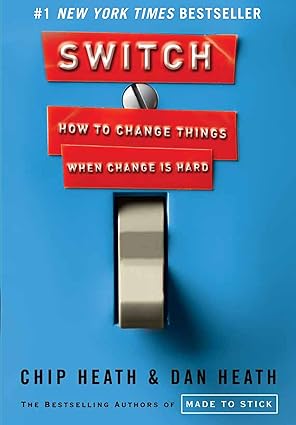
That’s exactly what “Switch: How to Change Things When Change Is Hard” by Chip Heath and Dan Heath explores—a beautifully simple, psychology-backed framework that teaches how to make change stick. Whether you’re leading a team, running a business, improving your habits, or transforming your personal life, this book becomes a practical, actionable guide.
If you want to grab a copy, you can check the latest price here: 👉 Buy Switch on Amazon.
What Makes “Switch” Such a Unique Book on Change?
There are hundreds of books on change management, personal growth, and organizational transformation. But “Switch” stands out for three reasons:
1. It uses science, but in a simple way.
The authors dive deep into psychology, neuroscience, and behavior change—yet explain everything with stories, metaphors, and humor.
2. It offers a repeatable model for any type of change.
The Rider + Elephant + Path framework is one of the most memorable models in personal development.
3. It is filled with relatable real-life examples.
From health reforms to corporate challenges to social movements, each story reinforces how small shifts can lead to massive impact.
This book isn’t just informative—it’s transformational.
The Core Concept – The Rider, The Elephant & The Path
The central idea of the book is refreshingly simple:
Every change requires three things—
- Direction (Rider)
- Motivation (Elephant)
- A Clear Environment (Path)
Let’s break them down.
The Rider – The Rational Mind
The “Rider” represents our logical, analytical side—the part that plans, calculates, and makes lists.
But the Rider has a problem:
It overthinks, overanalyzes, and often gets stuck in the spiral of “maybe later.”
To help the Rider:
- Give clear direction
- Eliminate confusion
- Highlight specific behaviors instead of vague goals
For example, wanting to “get healthy” is vague. But deciding to “walk 30 minutes every morning at 7 AM” is a clear, actionable step.
The Elephant – The Emotional Mind
This is the feeling-driven part of our brain. It acts on desire, fear, passion, exhaustion, joy, and instinct.
The Elephant provides energy and motivation, but it also resists uncomfortable or unfamiliar changes.
To move the Elephant:
- Appeal to emotions
- Celebrate small wins
- Make change feel rewarding
- Reduce fear and uncertainty
As the authors put it:
“If you want change, you must make the Elephant want to move.”
The Path – The Environment
Even the strongest Rider and Elephant struggle if the Path is unclear.
The Path represents:
- Structures
- Systems
- Surroundings
- Guidelines
- Social expectations
If the environment is designed for success, change becomes easy and automatic.
Example:
Want to eat healthier?
Keep junk food out of the house—the Path becomes supportive.
Why This Framework Works in Real Life
This isn’t just theory—it’s real human psychology.
The authors explain that most people fail to change not because they are lazy or weak, but because we often focus on only one part (usually logic) instead of creating a balanced approach.
The book emphasizes:
- Motivation alone is not enough.
- Knowledge alone is not enough.
- Systems alone are not enough.
True, lasting transformation happens only when the Rider, Elephant, and Path move together.
And if this concept fascinates you, you can grab the book here: 👉 Switch: How to Change Things When Change Is Hard.
Key Lessons and Insights from “Switch”
Here are the most powerful takeaways that you can apply immediately:
1. Script the Critical Moves
People don’t resist change—they resist ambiguity.
If you want change to happen, make the instructions simple and extremely specific.
Vague:
“Improve customer service.”
Clear:
“Respond to every customer email within two hours.”
2. Find the Bright Spots
Instead of focusing on what’s going wrong, identify what’s already working and do more of it.
A powerful example from the book is the story of malnourished children in Vietnam.
Instead of analyzing failures, researchers looked for families that were succeeding despite the same resources—and scaled their habits.
3. Motivate the Elephant with Emotion
Logic leads to conclusions.
Emotion leads to action.
The book encourages leaders to:
- Tell stories
- Create emotional urgency
- Show what success looks like
- Make the future feel inspiring, not threatening
4. Shrink the Change
Big goals overwhelm the Elephant.
Small steps energize it.
Whether it’s improving health, learning a skill, or changing a workplace culture—start tiny.
Examples:
- Want to read more? Start with 5 pages/day.
- Want to exercise? Start with 10 minutes.
Small changes, repeated consistently, build powerful momentum.
5. Build Habits That Stick
A supportive Path reduces friction.
When systems and surroundings make change automatic, discipline becomes unnecessary.
Examples:
- Automate savings
- Prepare meals in advance
- Create checklists for repetitive tasks
Humans are creatures of routine—and “Switch” teaches us to use that to our advantage.
Real-Life Stories That Bring the Book to Life
“Switch” is filled with inspirational case studies. Here are a few highlights:
How hospitals reduced infections by changing simple routines
A tiny, simple checklist saved thousands of lives. This story highlights how system design can create big change.
How a school system transformed student success
By focusing on “bright spots,” teachers improved student performance across struggling districts.
How businesses encouraged better habits in employees
Companies redesigned workflows and rewards to make new behaviors feel easy and satisfying.
How social movements used the Elephant-Path strategy
From anti-smoking campaigns to community projects, change spread faster when environments supported new actions.
These examples keep readers engaged and make the theory unforgettable.
Who Should Read “Switch”?
This book is a perfect read for:
- Leaders and managers
- Entrepreneurs and business owners
- HR professionals
- Teachers and educators
- Psychologists
- Students
- Anyone trying to change habits or lifestyle
- Anyone trying to convince others to adopt a new idea
Whether you’re pushing for organizational change or personal transformation, this book becomes a toolkit for success.
Grab your copy here:
👉 Buy Switch: How to Change Things When Change Is Hard
How “Switch” Helps in the Corporate World
If you’re dealing with resistance at work—this book is gold.
It teaches:
- How to communicate change without fear
- How to motivate teams emotionally
- How to design systems that ensure change sticks
- How to avoid burnout during transformation
- How to measure progress in simple, clear steps
Many organizations struggle because they rely too heavily on logic and forget the emotional and structural components.
“Switch” fills that gap.
How “Switch” Helps in Personal Life
Whether your goal is:
- Losing weight
- Saving money
- Improving relationships
- Reducing stress
- Learning a new skill
- Breaking a bad habit
“Switch” gives you a roadmap.
The key is recognizing that personal change requires:
- A clear plan
- Emotional buy-in
- A simplified environment
This combination makes transformation feel natural rather than forced.
Final Thoughts – Why This Book Is Worth Reading Today
Change will always be a part of life—technology evolves, careers shift, relationships grow, and habits shape our future.
“Switch” doesn’t just explain why change is difficult; it gives you the tools to make change inevitable.
It’s practical.
It’s relatable.
It’s inspiring.
And most importantly, it works.
If you want to understand the psychology of behavior, lead people effectively, or transform your personal habits, this book is one of the best guides you will ever read.
👉 Get your copy of Switch here: https://amzn.to/4ptkqkw
Must-Read Book Summaries You’ll Love
If leadership, mindset, influence, and personal growth fascinate you, don’t stop here. These hand-picked book summaries from our blog dive deeper into psychology, success, motivation, power, and timeless wisdom—each packed with practical takeaways you can use immediately:
Discover the psychology behind why people say “yes” and how ethical persuasion can transform leadership and decision-making.
Learn the life-changing power of seeing the world as it truly is, backed by data, logic, and optimism that reshapes how leaders think.
A deep dive into Daniel H. Pink’s revolutionary ideas on motivation—and why autonomy, mastery, and purpose matter more than rewards.
Explore how vulnerability becomes strength, helping leaders build trust, courage, and wholehearted living in both work and life.
A timeless guide to living in the present moment, reducing stress, and unlocking inner clarity—essential for mindful leadership.
An inside look at the mind of a visionary who is reshaping the future through relentless ambition, innovation, and risk-taking.
A bold exploration of power, politics, and leadership realities, offering lessons that remain surprisingly relevant today.
Master timeless strategies for winning—not just in war, but in business, leadership, and everyday challenges.
Uncover the money lessons schools never taught you, and reshape how you think about wealth, assets, and financial freedom.
The 7 Habits of Highly Effective People by Stephen R. Covey
A classic blueprint for personal effectiveness, leadership excellence, and long-term success that never goes out of style.
- Why Explore These Book Summaries?
- ✔ Quick insights from bestselling books
- ✔ Practical lessons for leadership & growth
- ✔ Easy-to-read, human-written summaries
- ✔ Perfect for lifelong learners & leaders
👉 Bookmark these reads and keep sharpening your leadership edge.
“Start Your Website Journey Today – Exclusive Hostinger Discounts!”

Turn Any Idea into Viral,
Jaw-Dropping AI Videos in Seconds!