 by
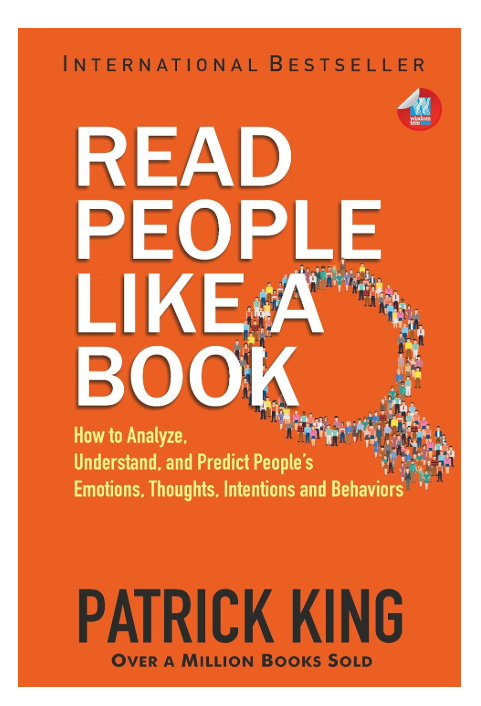
by Read People Like a Book by Patrick King: Master the Hidden Language of Human Behavior
Have you ever wished you could understand what people are truly thinking?
Imagine walking into a meeting and instantly sensing who is confident, who is nervous, and who is hiding something. Picture yourself having conversations where you can read emotions beyond words and build stronger relationships with ease.
This is exactly what Patrick King explores in his fascinating book, Read People Like a Book.
The book is not about mind reading. Instead, it teaches readers how to understand human behavior, body language, emotions, motivations, and communication patterns. Through practical examples and psychological insights, Patrick King provides a roadmap for decoding people and understanding what lies beneath the surface.
If you’ve ever struggled to interpret social situations, improve communication, or understand people’s intentions, this book offers valuable tools that can transform the way you interact with others.
👉 Grab your copy here: https://amzn.to/4dYCMFB
Why Understanding People Matters
Success in life is rarely determined by intelligence alone.
Whether you’re a student, entrepreneur, manager, salesperson, or parent, your ability to understand people often determines the quality of your relationships and opportunities.
Many conflicts arise not because people communicate poorly, but because they misunderstand each other’s emotions and intentions.
Patrick King argues that most communication happens beyond words. Facial expressions, gestures, posture, tone of voice, and behavioral patterns reveal far more than spoken language.
Learning to recognize these signals can help you:
- Build trust faster
- Improve relationships
- Avoid misunderstandings
- Detect dishonesty
- Become a better communicator
- Increase emotional intelligence
About the Author: Patrick King
Patrick King is a social interaction specialist and communication expert known for simplifying complex psychological concepts into practical strategies.
His books focus on:
- Social skills
- Emotional intelligence
- Human psychology
- Communication techniques
- Relationship building
In Read People Like a Book, King combines research-backed insights with actionable advice, making psychology accessible to everyday readers.
Key Lesson 1: People Always Reveal More Than They Say
One of the central ideas in the book is that words represent only a small portion of communication.
People often try to control what they say, but controlling body language and emotional signals is much harder.
For example:
- Crossed arms may indicate discomfort.
- Avoiding eye contact may suggest nervousness.
- Fidgeting can reveal anxiety.
- Leaning forward often signals interest.
The book teaches readers to observe clusters of behaviors rather than relying on a single signal.
A single gesture may be meaningless, but repeated patterns tell a story.
Key Lesson 2: Context Is Everything
A major mistake people make when reading body language is assuming every gesture has a fixed meaning.
Patrick King explains that context always matters.
For example:
A person crossing their arms may be:
- Feeling defensive
- Feeling cold
- Simply comfortable
Without considering the environment and circumstances, conclusions can be misleading.
The most accurate observations come from combining:
- Context
- Behavioral patterns
- Verbal communication
- Emotional cues
This approach prevents snap judgments and improves accuracy.
Key Lesson 3: Establish a Baseline
One of the most practical techniques in the book is establishing a behavioral baseline.
A baseline is how a person normally behaves when relaxed and comfortable.
Before identifying unusual behavior, you must know what is normal for that individual.
For example:
If someone naturally speaks quickly, rapid speech does not necessarily indicate nervousness.
If someone typically avoids eye contact, that behavior may simply be part of their personality.
When people deviate from their baseline, it often signals emotional changes worth noticing.
This principle is especially useful in interviews, negotiations, and professional settings.
Key Lesson 4: Emotions Drive Human Behavior
Patrick King emphasizes that emotions influence nearly every decision people make.
Even when individuals believe they are acting logically, emotions often guide their choices.
Understanding emotional drivers helps explain:
- Buying decisions
- Relationship conflicts
- Workplace disagreements
- Personal motivations
The ability to recognize emotions allows you to respond more effectively and empathetically.
This skill is a cornerstone of emotional intelligence.
Key Lesson 5: Learn to Read Microexpressions
Microexpressions are brief facial expressions that appear for a fraction of a second.
These expressions often reveal genuine emotions before a person consciously controls them.
Examples include:
- Surprise
- Fear
- Happiness
- Anger
- Sadness
- Disgust
Although microexpressions can be difficult to spot, developing awareness of them improves your understanding of people’s emotional states.
The book encourages careful observation without becoming judgmental.
Key Lesson 6: Listen Beyond Words
Most people focus on what is being said.
Exceptional communicators focus on how it is being said.
Pay attention to:
- Tone of voice
- Speaking speed
- Volume changes
- Pauses
- Emotional intensity
A simple sentence can carry completely different meanings depending on delivery.
Understanding these subtleties improves communication and reduces misunderstandings.
Key Lesson 7: Detecting Inconsistencies
One of the most valuable insights in Read People Like a Book is identifying inconsistencies.
When words and actions do not match, deeper investigation may be necessary.
For example:
A person saying they are excited while displaying signs of discomfort may not feel as positive as they claim.
King advises readers not to jump to conclusions but to observe patterns carefully.
Consistency often indicates authenticity.
Inconsistency can reveal hidden emotions.
Key Lesson 8: Empathy Is More Powerful Than Judgment
The goal of reading people is not manipulation.
Instead, Patrick King advocates understanding others with empathy.
When you understand why people behave a certain way, you become:
- More patient
- More compassionate
- More persuasive
- Better at resolving conflicts
Empathy strengthens relationships because people feel seen and understood.
This lesson transforms people-reading from a tactical skill into a human-centered practice.
Key Lesson 9: Human Behavior Follows Patterns
People are unique, but behavior often follows predictable patterns.
The book encourages readers to look for recurring themes such as:
- Stress responses
- Communication habits
- Emotional triggers
- Decision-making styles
Recognizing patterns helps you anticipate reactions and communicate more effectively.
The more you observe, the more accurate your understanding becomes.
Key Lesson 10: Observation Is a Skill You Can Develop
Many people believe social intuition is a natural talent.
Patrick King disagrees.
He argues that observation is a learnable skill.
Like any skill, it improves through practice.
Simple exercises include:
- Observing interactions in public places
- Paying attention to facial expressions
- Noticing changes in tone and posture
- Reflecting on conversations afterward
Over time, these habits sharpen your ability to understand people.
Practical Applications of the Book
The lessons from Read People Like a Book can be applied in many areas of life.
In Relationships
You become more aware of your partner’s emotions and needs.
In Business
You can communicate more effectively with clients, colleagues, and employees.
In Leadership
Understanding people helps build trust and improve team performance.
In Sales
Recognizing customer emotions can improve conversations and outcomes.
In Everyday Life
You develop stronger social awareness and confidence.
Who Should Read This Book?
This book is ideal for:
- Students
- Professionals
- Entrepreneurs
- Managers
- Salespeople
- Parents
- Anyone interested in psychology
If you want to improve communication skills, understand body language, and increase emotional intelligence, this book offers tremendous value.
👉 Check out the book here: https://amzn.to/4dYCMFB
Strengths of the Book
Easy to Understand
Patrick King avoids academic jargon and explains concepts clearly.
Practical Advice
The book focuses on actionable strategies rather than theory alone.
Real-World Examples
Examples make the lessons relatable and easier to apply.
Immediate Benefits
Readers can start using the techniques almost immediately.
Limitations of the Book
No book is perfect.
Some readers looking for deep academic psychology may find the content relatively introductory.
However, this simplicity is also one of its greatest strengths because it makes the material accessible to a wider audience.
Final Thoughts
Read People Like a Book is an insightful guide to understanding human behavior, body language, and emotional intelligence.
Patrick King demonstrates that reading people is not about manipulation or mind reading. It is about paying attention, understanding emotions, and developing empathy.
In a world where communication often happens at lightning speed, the ability to understand people has become a competitive advantage.
Whether you want to strengthen relationships, improve leadership skills, enhance communication, or simply become more socially aware, this book provides practical tools that can help you succeed.
The greatest lesson from the book is simple:
People are constantly communicating, even when they are silent. The better we become at understanding those signals, the stronger our relationships and interactions become.
If you’re ready to unlock the secrets of human behavior and improve your social intelligence, this book deserves a place on your reading list.
👉 Get your copy today: https://amzn.to/4dYCMFB
Happy reading and happy people-watching!
Must-Read Book Summaries You’ll Love
If leadership, mindset, influence, and personal growth fascinate you, don’t stop here. These hand-picked book summaries from our blog dive deeper into psychology, success, motivation, power, and timeless wisdom—each packed with practical takeaways you can use immediately:
Discover the psychology behind why people say “yes” and how ethical persuasion can transform leadership and decision-making.
Learn the life-changing power of seeing the world as it truly is, backed by data, logic, and optimism that reshapes how leaders think.
A deep dive into Daniel H. Pink’s revolutionary ideas on motivation—and why autonomy, mastery, and purpose matter more than rewards.
Explore how vulnerability becomes strength, helping leaders build trust, courage, and wholehearted living in both work and life.
A timeless guide to living in the present moment, reducing stress, and unlocking inner clarity—essential for mindful leadership.
An inside look at the mind of a visionary who is reshaping the future through relentless ambition, innovation, and risk-taking.
A bold exploration of power, politics, and leadership realities, offering lessons that remain surprisingly relevant today.
Master timeless strategies for winning—not just in war, but in business, leadership, and everyday challenges.
Uncover the money lessons schools never taught you, and reshape how you think about wealth, assets, and financial freedom.
The 7 Habits of Highly Effective People by Stephen R. Covey
A classic blueprint for personal effectiveness, leadership excellence, and long-term success that never goes out of style.
- Why Explore These Book Summaries?
- ✔ Quick insights from bestselling books
- ✔ Practical lessons for leadership & growth
- ✔ Easy-to-read, human-written summaries
- ✔ Perfect for lifelong learners & leaders
👉 Bookmark these reads and keep sharpening your leadership edge.
“Start Your Website Journey Today – Exclusive Hostinger Discounts!”