 by
by Introduction: Why Most Strategies Fail Before They Even Begin
In a world overflowing with business plans, mission statements, and ambitious goals, one question remains surprisingly difficult to answer: What is a real strategy?
Many organizations proudly display lengthy documents filled with buzzwords, lofty visions, and ambitious targets. Yet despite all the planning, many businesses struggle to achieve meaningful results. According to renowned strategy expert Richard Rumelt, the problem is simple: most organizations confuse goals with strategy.
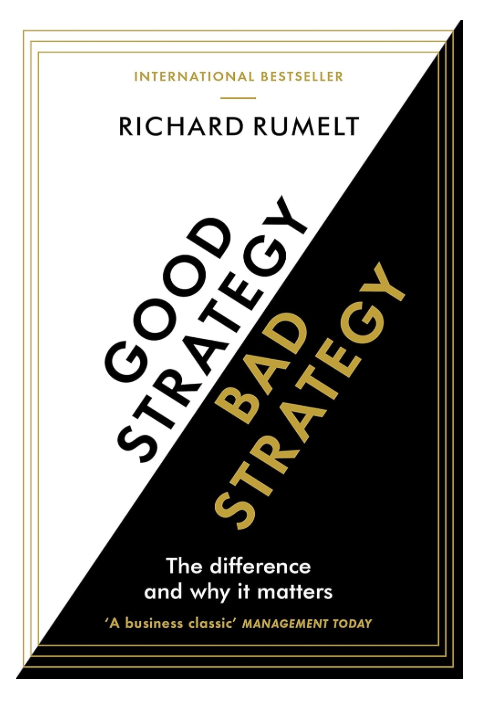
In his bestselling book, Good Strategy/Bad Strategy: The Difference and Why It Matters, Richard Rumelt exposes the hidden weaknesses behind ineffective strategies and reveals what separates successful organizations from those that merely dream of success.
If you’re a business owner, entrepreneur, manager, student, or anyone interested in achieving meaningful results, this book provides a practical framework for thinking strategically.
👉 Grab your copy of Good Strategy/Bad Strategy here: https://amzn.to/4ug6kVq
About the Author: Richard Rumelt
Richard Rumelt is widely regarded as one of the world’s leading authorities on business strategy. As a professor at UCLA Anderson School of Management, he has spent decades studying organizations, competitive advantage, and strategic decision-making.
His work has influenced business leaders, governments, and organizations worldwide. In Good Strategy/Bad Strategy, Rumelt combines academic insights with real-world examples to explain why some strategies succeed while others fail spectacularly.
What Is Good Strategy?
According to Rumelt, a good strategy is not a wish list. It is not a collection of goals. It is not a motivational slogan.
A good strategy identifies a critical challenge and provides a coherent approach for overcoming it.
Good strategy focuses resources and efforts on the most important issues rather than trying to solve everything at once.
The foundation of good strategy consists of three elements, which Rumelt calls the Kernel of Strategy:
1. Diagnosis
The first step is understanding the real problem.
Many leaders rush to solutions without fully understanding the challenge they face. Effective strategists carefully analyze the situation and identify the root causes behind obstacles.
A good diagnosis simplifies complexity and highlights the factors that matter most.
2. Guiding Policy
Once the challenge is identified, leaders create a guiding policy.
This policy provides a general approach for dealing with the challenge. It serves as a roadmap that directs decision-making throughout the organization.
3. Coherent Actions
The final step involves implementing coordinated actions that support the guiding policy.
Individual actions should work together toward a common objective rather than operating independently.
When diagnosis, policy, and actions align, organizations create powerful momentum toward success.
What Is Bad Strategy?
Rumelt argues that bad strategy is surprisingly common.
Many organizations spend enormous amounts of time developing plans that sound impressive but lack substance.
Here are the four major signs of bad strategy:
1. Fluff
Fluff uses fancy language to hide the absence of real thinking.
Statements like “leveraging integrated solutions to maximize stakeholder value” may sound impressive, but they often communicate nothing meaningful.
Good strategy uses clear and direct language.
2. Failure to Face the Challenge
Some leaders avoid discussing difficult realities.
Instead of confronting problems directly, they focus on optimism and motivation.
However, strategy begins with acknowledging challenges honestly.
3. Mistaking Goals for Strategy
One of the biggest mistakes is treating goals as strategy.
For example:
- Goal: Increase revenue by 50%
- Goal: Become market leader
- Goal: Improve customer satisfaction
These are desired outcomes, not strategies.
Strategy explains how these goals will be achieved.
4. Bad Strategic Objectives
Effective objectives address critical issues.
Bad objectives are often vague, unrealistic, or disconnected from actual challenges.
The Power of Focus
One of Rumelt’s strongest messages is that strategy requires focus.
Resources are always limited.
Time is limited.
Attention is limited.
Organizations that attempt to pursue dozens of priorities simultaneously often achieve very little.
Successful strategists identify a few critical opportunities and concentrate their efforts where they can create the greatest impact.
This principle applies equally to businesses, careers, and personal development.
Why Competitive Advantage Matters
A central theme throughout the book is competitive advantage.
Competitive advantage is what allows an organization to outperform competitors consistently.
Rumelt explains that advantage often comes from:
- Specialized knowledge
- Unique resources
- Better systems
- Superior customer experience
- Operational efficiency
- Innovation
The goal of strategy is not merely survival but creating and strengthening advantages over time.
Strategic Thinking vs Strategic Planning
Many organizations invest heavily in strategic planning.
Rumelt argues that planning alone is not enough.
Planning often focuses on schedules, budgets, and targets.
Strategic thinking focuses on understanding situations, identifying leverage points, and making difficult choices.
A hundred-page strategic plan cannot compensate for weak strategic thinking.
Effective leaders spend more time analyzing challenges than producing documents.
The Importance of Leverage
One of the most powerful concepts in the book is leverage.
Leverage means identifying actions that generate disproportionate results.
Instead of spreading resources evenly, strategic leaders search for opportunities where a small effort can create significant impact.
Examples include:
- Targeting a high-growth market segment
- Improving a critical bottleneck
- Introducing a breakthrough innovation
- Strengthening a key customer relationship
Finding leverage points often separates extraordinary success from average performance.
Lessons Entrepreneurs Can Learn
Entrepreneurs can gain tremendous value from Rumelt’s insights.
Focus on the Biggest Challenge
Identify the single biggest obstacle preventing growth.
Solve that problem before chasing new opportunities.
Avoid Shiny Object Syndrome
New ideas appear constantly.
Successful entrepreneurs remain focused on their strategic priorities.
Build Sustainable Advantages
Instead of competing solely on price, create unique value that competitors cannot easily copy.
Make Tough Choices
Strategy requires saying no.
Every decision to pursue one opportunity means declining another.
Real-World Applications of Good Strategy
The principles in this book extend far beyond business.
Career Development
Rather than setting vague goals like “be successful,” identify specific challenges holding you back and create targeted actions.
Personal Finance
Instead of merely wanting to save money, develop a strategy that addresses spending habits and income growth.
Education
Students can use strategic thinking to focus on high-impact learning activities rather than trying to master everything simultaneously.
Leadership
Leaders who communicate clear strategies help teams align their efforts and achieve better outcomes.
Top 10 Lessons from Good Strategy/Bad Strategy
1. Strategy Is Not a Goal
Goals describe desired outcomes. Strategy explains how to achieve them.
2. Honest Diagnosis Comes First
Understanding the real challenge is essential.
3. Simplicity Creates Clarity
The best strategies are often straightforward.
4. Focus Beats Complexity
Concentrated effort produces stronger results.
5. Resources Must Be Directed
Effective strategy allocates resources where they matter most.
6. Leverage Is Powerful
Small actions can sometimes create huge results.
7. Competitive Advantage Matters
Sustainable success requires differentiation.
8. Good Leaders Face Reality
Ignoring problems never solves them.
9. Coordination Is Essential
Actions must reinforce each other.
10. Strategic Thinking Is a Skill
Anyone can improve strategic thinking through practice and reflection.
Who Should Read This Book?
This book is ideal for:
- Entrepreneurs
- Business owners
- Executives
- Managers
- Students of business
- Startup founders
- Team leaders
- Consultants
- Investors
Anyone responsible for making important decisions will benefit from Rumelt’s practical insights.
👉 Get your copy today and start building stronger strategies: https://amzn.to/4ug6kVq
Key Quotes from the Book
Here are a few memorable ideas from Rumelt:
- Good strategy requires identifying critical challenges.
- Strategy is about choice and focus.
- Effective leaders concentrate resources where they matter most.
- Clear thinking beats complicated planning.
These principles remain relevant regardless of industry or organization size.
Final Verdict: Why Good Strategy/Bad Strategy Is a Must-Read
Few business books challenge conventional thinking as effectively as Good Strategy/Bad Strategy.
Richard Rumelt strips away corporate jargon and reveals the fundamental principles behind successful strategic decision-making. His framework is practical, actionable, and applicable to virtually every area of life and business.
The book’s greatest strength lies in its simplicity. Rather than overwhelming readers with complex models, Rumelt focuses on timeless principles that help leaders identify challenges, concentrate resources, and execute effectively.
If you want to become a better leader, entrepreneur, strategist, or decision-maker, this book deserves a permanent place on your reading list.
Whether you’re running a startup, managing a team, building a career, or pursuing personal goals, the lessons in this book can help you achieve meaningful results.
📖 Ready to transform the way you think about strategy? Get your copy here: https://amzn.to/4ug6kVq
Conclusion
Success rarely happens by accident. Behind every remarkable achievement is a thoughtful strategy that identifies challenges, focuses resources, and coordinates action.
Good Strategy/Bad Strategy teaches us that effective strategy isn’t about setting bigger goals. It’s about understanding reality, making smart choices, and executing with purpose.
In an increasingly competitive world, strategic thinking has become one of the most valuable skills anyone can develop. Richard Rumelt’s masterpiece provides the roadmap.
Must-Read Book Summaries You’ll Love
If leadership, mindset, influence, and personal growth fascinate you, don’t stop here. These hand-picked book summaries from our blog dive deeper into psychology, success, motivation, power, and timeless wisdom—each packed with practical takeaways you can use immediately:
Discover the psychology behind why people say “yes” and how ethical persuasion can transform leadership and decision-making.
Learn the life-changing power of seeing the world as it truly is, backed by data, logic, and optimism that reshapes how leaders think.
A deep dive into Daniel H. Pink’s revolutionary ideas on motivation—and why autonomy, mastery, and purpose matter more than rewards.
Explore how vulnerability becomes strength, helping leaders build trust, courage, and wholehearted living in both work and life.
A timeless guide to living in the present moment, reducing stress, and unlocking inner clarity—essential for mindful leadership.
An inside look at the mind of a visionary who is reshaping the future through relentless ambition, innovation, and risk-taking.
A bold exploration of power, politics, and leadership realities, offering lessons that remain surprisingly relevant today.
Master timeless strategies for winning—not just in war, but in business, leadership, and everyday challenges.
Uncover the money lessons schools never taught you, and reshape how you think about wealth, assets, and financial freedom.
The 7 Habits of Highly Effective People by Stephen R. Covey
A classic blueprint for personal effectiveness, leadership excellence, and long-term success that never goes out of style.
- Why Explore These Book Summaries?
- ✔ Quick insights from bestselling books
- ✔ Practical lessons for leadership & growth
- ✔ Easy-to-read, human-written summaries
- ✔ Perfect for lifelong learners & leaders
👉 Bookmark these reads and keep sharpening your leadership edge.
“Start Your Website Journey Today – Exclusive Hostinger Discounts!”