 by
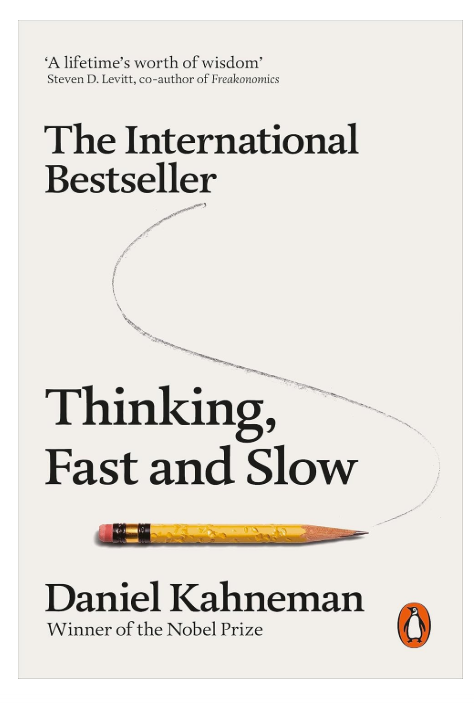
by Thinking, Fast and Slow by Daniel Kahneman: The Book That Reveals How Your Mind Really Works
Have you ever made a decision that felt right in the moment, only to realize later that it was completely wrong?
Perhaps you bought a stock because everyone else was buying it. Maybe you judged someone within seconds of meeting them. Or perhaps you chose the easier option without fully thinking through the consequences.
If any of this sounds familiar, you’re not alone.
In his groundbreaking bestseller Thinking, Fast and Slow, Nobel Prize-winning psychologist Daniel Kahneman takes readers on a fascinating journey into the hidden machinery of the human mind. The book explains why we think the way we do, why we make irrational decisions, and how understanding our mental shortcuts can help us make better choices in life, business, investing, and relationships.
If you’re interested in psychology, productivity, personal development, or investing, this book deserves a place on your reading list.
👉 Grab your copy here: https://amzn.to/4wWmKVc
About the Author: Daniel Kahneman
Daniel Kahneman was one of the world’s most influential psychologists and received the Nobel Prize in Economics for his pioneering work on decision-making and behavioral economics.
Together with his research partner Amos Tversky, Kahneman challenged the traditional belief that humans make rational decisions. Their research demonstrated that people frequently rely on mental shortcuts and biases that can lead to predictable errors.
Their findings have transformed fields ranging from economics and finance to marketing and public policy.
The Core Idea: Two Systems of Thinking
At the heart of the book lies a simple but powerful concept.
According to Kahneman, our minds operate using two different systems:
System 1: Fast Thinking
System 1 works automatically and instantly.
It is:
- Fast
- Intuitive
- Emotional
- Effortless
Examples include:
- Recognizing a familiar face
- Completing simple phrases
- Detecting anger in someone’s voice
- Making snap judgments
System 1 is incredibly useful because it allows us to navigate everyday life quickly.
However, it is also responsible for many of our mistakes.
System 2: Slow Thinking
System 2 is deliberate and analytical.
It is:
- Logical
- Careful
- Effortful
- Conscious
Examples include:
- Solving a math problem
- Comparing investment options
- Planning a business strategy
- Evaluating evidence
While System 2 produces better decisions, it requires energy and concentration.
Because thinking deeply is mentally expensive, our brains often prefer the easier route: System 1.
Why We Make Bad Decisions
One of the most eye-opening lessons in the book is that our brains are not designed to seek truth.
Instead, they are designed to conserve energy.
As a result, we often rely on shortcuts called heuristics.
These shortcuts help us make quick decisions but can also lead to serious mistakes.
Key Lesson #1: We Are Overconfident
Most people believe they know more than they actually do.
Investors think they can predict markets.
Entrepreneurs believe their businesses will succeed.
Drivers think they are above average.
The problem?
Statistics show that most of these beliefs cannot all be true.
Kahneman explains that humans consistently overestimate their knowledge and ability to predict the future.
This overconfidence can lead to poor financial decisions, risky investments, and costly mistakes.
Key Lesson #2: First Impressions Are Powerful
When meeting someone for the first time, your brain quickly creates a story about that person.
You may assume they are intelligent, trustworthy, or competent based on limited information.
This phenomenon is called the Halo Effect.
A single positive characteristic influences your overall judgment.
Businesses, politicians, and marketers often benefit from this bias because people tend to form opinions quickly and then defend those opinions.
Key Lesson #3: Losses Hurt More Than Gains Feel Good
One of the most important concepts in behavioral economics is Loss Aversion.
Simply put:
Losing ₹1,000 feels more painful than gaining ₹1,000 feels pleasurable.
This explains why:
- Investors hold losing stocks too long
- People avoid necessary risks
- Businesses fear change
Understanding loss aversion can dramatically improve your financial decisions.
Key Lesson #4: Anchoring Influences Decisions
Imagine someone asks:
“Was Gandhi older or younger than 120 years when he died?”
You know the number is ridiculous.
Yet that number still affects your estimate.
This is known as Anchoring.
The first piece of information we receive influences our later judgments.
Retailers use this strategy frequently by displaying higher original prices before offering discounts.
Key Lesson #5: Availability Bias Distorts Reality
People tend to judge events based on how easily examples come to mind.
For instance:
After hearing news about airplane accidents, many people become afraid of flying.
Yet statistically, flying remains one of the safest forms of transportation.
The dramatic story sticks in memory and makes the risk seem larger than it really is.
This bias affects everything from investing to personal relationships.
Key Lesson #6: The Power of Framing
The way information is presented changes how people respond.
Consider these two statements:
- This treatment has a 90% survival rate.
- This treatment has a 10% mortality rate.
Both statements mean exactly the same thing.
Yet people react differently.
The lesson?
Words matter.
How choices are framed can significantly influence decisions.
Key Lesson #7: Intuition Is Useful, But Not Perfect
Many successful people trust their instincts.
Kahneman agrees that intuition can be valuable.
However, intuition works best in environments where we have extensive experience and receive clear feedback.
A chess master may have excellent intuition about chess.
That doesn’t mean the same person has accurate intuition about stock markets or business forecasts.
The key is knowing when intuition can be trusted and when deeper analysis is required.
How This Book Helps Investors
Investors can gain enormous value from this book.
Many market mistakes come from psychological biases.
Examples include:
- Following the crowd
- Panic selling
- Overconfidence
- Ignoring evidence
- Chasing recent trends
By understanding these biases, investors can make more rational decisions.
If you’re interested in improving your investing mindset, this book is a must-read.
👉 Get your copy here: https://amzn.to/4wWmKVc
How This Book Helps Entrepreneurs
Entrepreneurs constantly make decisions under uncertainty.
Kahneman’s insights can help founders:
- Evaluate risks more accurately
- Avoid overconfidence
- Improve strategic planning
- Make data-driven decisions
- Understand customer psychology
In today’s competitive business environment, these skills are invaluable.
How This Book Improves Everyday Life
The lessons extend far beyond business and investing.
You’ll become better at:
- Managing money
- Evaluating information
- Avoiding manipulation
- Making career decisions
- Understanding people
Once you recognize how your brain operates, you’ll begin noticing biases everywhere.
It’s like turning on a light in a room you didn’t realize was dark.
Best Quotes and Insights
Some of the most memorable ideas from the book include:
- “We can be blind to the obvious, and we are also blind to our blindness.”
- Confidence is not evidence of accuracy.
- What you see is not always all there is.
- Human judgment is far less rational than we believe.
These insights challenge many assumptions we hold about ourselves.
Strengths of the Book
What Readers Love
✔ Deep psychological insights
✔ Practical applications
✔ Backed by decades of research
✔ Valuable for investors and entrepreneurs
✔ Changes the way you think
Potential Challenges
The book is not a quick read.
Some sections contain detailed research and academic examples.
Readers looking for a fast-paced self-help book may find parts of it demanding.
However, the knowledge gained is well worth the effort.
Final Verdict
Thinking, Fast and Slow is more than a psychology book.
It is a guide to understanding human behavior.
Daniel Kahneman reveals why smart people make mistakes, why our judgments are often flawed, and how we can improve our decision-making process.
Whether you’re an investor, entrepreneur, student, leader, or lifelong learner, the lessons in this book can transform the way you think.
Rating: ⭐⭐⭐⭐⭐ (5/5)
This is one of the most important non-fiction books ever written and remains essential reading for anyone who wants to understand how the human mind truly works.
📖 Ready to read the book that changed modern psychology and behavioral economics?
👉 Buy Thinking, Fast and Slow here: https://amzn.to/4wWmKVc
The greatest decisions in life often begin with understanding how we think. This book shows you exactly where to start.
Must-Read Book Summaries You’ll Love
If leadership, mindset, influence, and personal growth fascinate you, don’t stop here. These hand-picked book summaries from our blog dive deeper into psychology, success, motivation, power, and timeless wisdom—each packed with practical takeaways you can use immediately:
Discover the psychology behind why people say “yes” and how ethical persuasion can transform leadership and decision-making.
Learn the life-changing power of seeing the world as it truly is, backed by data, logic, and optimism that reshapes how leaders think.
A deep dive into Daniel H. Pink’s revolutionary ideas on motivation—and why autonomy, mastery, and purpose matter more than rewards.
Explore how vulnerability becomes strength, helping leaders build trust, courage, and wholehearted living in both work and life.
A timeless guide to living in the present moment, reducing stress, and unlocking inner clarity—essential for mindful leadership.
An inside look at the mind of a visionary who is reshaping the future through relentless ambition, innovation, and risk-taking.
A bold exploration of power, politics, and leadership realities, offering lessons that remain surprisingly relevant today.
Master timeless strategies for winning—not just in war, but in business, leadership, and everyday challenges.
Uncover the money lessons schools never taught you, and reshape how you think about wealth, assets, and financial freedom.
The 7 Habits of Highly Effective People by Stephen R. Covey
A classic blueprint for personal effectiveness, leadership excellence, and long-term success that never goes out of style.
- Why Explore These Book Summaries?
- ✔ Quick insights from bestselling books
- ✔ Practical lessons for leadership & growth
- ✔ Easy-to-read, human-written summaries
- ✔ Perfect for lifelong learners & leaders
👉 Bookmark these reads and keep sharpening your leadership edge.
“Start Your Website Journey Today – Exclusive Hostinger Discounts!”