 by
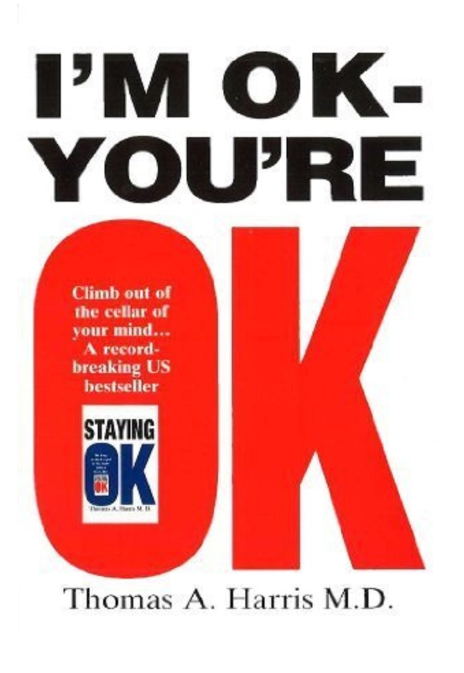
by I’m OK, You’re OK by Thomas A. Harris M.D.: A Timeless Guide to Better Relationships and Self-Understanding
Have you ever wondered why some conversations leave you feeling confident and understood, while others make you feel frustrated, defensive, or misunderstood?
The answer may lie in a groundbreaking concept introduced by psychiatrist Thomas A. Harris in his bestselling book I’m OK, You’re OK. First published in 1967, this classic remains one of the most influential psychology and personal development books ever written.
In a world where communication challenges exist everywhere, from workplaces and classrooms to marriages and friendships, Harris provides a practical framework for understanding why people behave the way they do and how healthier interactions can transform our lives.
If you’re looking for a book that can help improve your relationships, boost emotional intelligence, and increase self-awareness, this timeless masterpiece deserves a place on your reading list.
👉 Get your copy here: https://amzn.to/4fggLV5
About the Author
Thomas Anthony Harris was an American psychiatrist who specialized in Transactional Analysis (TA), a psychological theory developed by psychiatrist Eric Berne.
Harris took Berne’s complex psychological concepts and translated them into language that everyday readers could understand. The result was I’m OK, You’re OK, a book that spent years on bestseller lists and helped millions of people improve their lives.
What Is the Book About?
At its core, I’m OK, You’re OK explores the idea that our thoughts, emotions, and behaviors are influenced by three internal ego states:
1. Parent
This ego state contains attitudes, rules, and beliefs we absorbed from authority figures during childhood.
Examples:
- “You should always work hard.”
- “Don’t talk to strangers.”
- “People must respect authority.”
2. Adult
The Adult state is logical, rational, and objective.
Examples:
- Evaluating facts before making decisions.
- Solving problems using reason.
- Making informed choices.
3. Child
This ego state represents feelings, emotions, creativity, and reactions developed during childhood.
Examples:
- Joy and excitement
- Fear and insecurity
- Curiosity and imagination
According to Harris, understanding these three ego states helps us identify why we react the way we do and how we can communicate more effectively.
Understanding Transactional Analysis
One of the most powerful concepts in the book is Transactional Analysis (TA).
A “transaction” is simply an interaction between two people.
For example:
Person A: “Did you finish the report?”
Person B: “Yes, I submitted it this morning.”
This is an Adult-to-Adult transaction, typically healthy and productive.
However, conversations can become complicated when different ego states clash.
Example:
Parent: “You always leave things until the last minute.”
Child: “Stop criticizing me!”
Such interactions often lead to conflict, misunderstandings, and emotional tension.
By recognizing these patterns, we can consciously choose healthier responses.
The Four Life Positions
One of the most famous ideas from the book is the concept of four life positions.
These positions reflect how we view ourselves and others.
1. I’m Not OK, You’re OK
People in this position often:
- Feel inferior
- Lack confidence
- Seek approval constantly
This is common in childhood and can persist into adulthood.
2. I’m Not OK, You’re Not OK
This position creates hopelessness and pessimism.
People may believe:
- Nothing will improve
- Nobody can be trusted
- Life lacks meaning
3. I’m OK, You’re Not OK
People may become:
- Judgmental
- Controlling
- Arrogant
They often blame others for problems.
4. I’m OK, You’re OK
This is the healthiest position.
People:
- Respect themselves
- Respect others
- Build strong relationships
- Communicate effectively
Harris argues that achieving this mindset is essential for emotional well-being and personal growth.
Why This Book Remains Relevant Today
Although written decades ago, the lessons are surprisingly relevant in modern life.
Social Media Conflicts
Many online arguments are driven by emotional Child responses instead of rational Adult communication.
Workplace Challenges
Managers and employees often struggle because conversations shift into Parent-Child dynamics rather than Adult-Adult discussions.
Relationship Problems
Many misunderstandings stem from old emotional patterns that people don’t even realize they’re repeating.
The book helps readers recognize these hidden patterns and break free from them.
Key Lessons from I’m OK, You’re OK
1. Self-Awareness Is the Foundation of Growth
Before changing behavior, we must understand it.
Harris encourages readers to examine:
- Their emotional triggers
- Communication habits
- Childhood influences
Awareness creates the opportunity for change.
2. Childhood Programming Shapes Adult Behavior
Many beliefs we hold today originated in childhood.
Some examples:
- Fear of failure
- Need for approval
- Fear of rejection
Recognizing these influences allows us to make conscious choices instead of automatic reactions.
3. The Adult Ego State Is Your Greatest Asset
The Adult state processes information objectively.
When emotions run high, activating the Adult state can help you:
- Make better decisions
- Reduce conflict
- Solve problems effectively
This skill is valuable in both personal and professional settings.
4. Healthy Relationships Require Mutual Respect
The book teaches that lasting relationships thrive when both people operate from an “I’m OK, You’re OK” position.
This means:
- Listening without judgment
- Respecting differences
- Avoiding blame
- Communicating honestly
5. Change Is Possible
One of the book’s most empowering messages is that people are not trapped by their past.
No matter what experiences shaped you, growth remains possible.
New awareness can create new behaviors.
Practical Applications in Everyday Life
At Work
Transactional Analysis helps professionals:
- Handle workplace conflicts
- Improve leadership skills
- Communicate effectively
- Build stronger teams
In Marriage and Relationships
Couples can:
- Understand recurring arguments
- Recognize emotional triggers
- Develop healthier communication habits
In Parenting
Parents can learn:
- How their words influence children
- Why children react emotionally
- How to encourage healthy self-esteem
In Personal Development
Readers can:
- Improve confidence
- Strengthen emotional intelligence
- Develop self-awareness
- Create healthier boundaries
Strengths of the Book
Easy to Understand
Complex psychological concepts are presented in simple language.
Practical and Actionable
Readers can immediately apply the ideas to real-life situations.
Timeless Principles
The insights remain valuable decades after publication.
Relationship Focused
Few psychology books explain interpersonal dynamics as clearly as Harris does.
Criticisms of the Book
While influential, some modern psychologists believe the book oversimplifies certain aspects of human behavior.
Others argue that psychological research has advanced significantly since the book’s publication.
However, even critics acknowledge that the book provides a useful framework for understanding communication and relationships.
Who Should Read This Book?
This book is ideal for:
- Students interested in psychology
- Professionals seeking better communication skills
- Parents
- Couples
- Leaders and managers
- Anyone interested in self-improvement
If you’ve ever wondered why people behave the way they do, this book offers valuable insights.
👉 Grab your copy here: https://amzn.to/4fggLV5
Memorable Takeaways
Here are some of the most powerful lessons from I’m OK, You’re OK:
✔ Understand your Parent, Adult, and Child ego states.
✔ Recognize unhealthy communication patterns.
✔ Shift toward Adult-to-Adult interactions.
✔ Develop an “I’m OK, You’re OK” mindset.
✔ Build stronger relationships through mutual respect.
✔ Increase emotional intelligence and self-awareness.
✔ Take responsibility for your reactions.
✔ Understand that positive change is possible.
Final Thoughts
I’m OK, You’re OK by Thomas A. Harris M.D. remains one of the most influential personal development and psychology books ever written.
Its enduring popularity comes from its simple yet profound message: healthy relationships begin when we recognize our own worth while respecting the worth of others.
The book offers practical tools for understanding communication, resolving conflict, and achieving greater emotional maturity. Whether you’re looking to improve your career, relationships, parenting skills, or personal growth journey, the lessons inside remain as valuable today as they were when first published.
More than a psychology book, it serves as a guide to understanding human behavior and creating meaningful connections in every area of life.
If you’re serious about improving communication, emotional intelligence, and self-awareness, this classic deserves a place in your library.
👉 Buy the book on Amazon: https://amzn.to/4fggLV5
Must-Read Book Summaries You’ll Love
If leadership, mindset, influence, and personal growth fascinate you, don’t stop here. These hand-picked book summaries from our blog dive deeper into psychology, success, motivation, power, and timeless wisdom—each packed with practical takeaways you can use immediately:
Discover the psychology behind why people say “yes” and how ethical persuasion can transform leadership and decision-making.
Learn the life-changing power of seeing the world as it truly is, backed by data, logic, and optimism that reshapes how leaders think.
A deep dive into Daniel H. Pink’s revolutionary ideas on motivation—and why autonomy, mastery, and purpose matter more than rewards.
Explore how vulnerability becomes strength, helping leaders build trust, courage, and wholehearted living in both work and life.
A timeless guide to living in the present moment, reducing stress, and unlocking inner clarity—essential for mindful leadership.
An inside look at the mind of a visionary who is reshaping the future through relentless ambition, innovation, and risk-taking.
A bold exploration of power, politics, and leadership realities, offering lessons that remain surprisingly relevant today.
Master timeless strategies for winning—not just in war, but in business, leadership, and everyday challenges.
Uncover the money lessons schools never taught you, and reshape how you think about wealth, assets, and financial freedom.
The 7 Habits of Highly Effective People by Stephen R. Covey
A classic blueprint for personal effectiveness, leadership excellence, and long-term success that never goes out of style.
- Why Explore These Book Summaries?
- ✔ Quick insights from bestselling books
- ✔ Practical lessons for leadership & growth
- ✔ Easy-to-read, human-written summaries
- ✔ Perfect for lifelong learners & leaders
👉 Bookmark these reads and keep sharpening your leadership edge.
“Start Your Website Journey Today – Exclusive Hostinger Discounts!”