 by
by Understanding the Hidden Scripts That Shape Our Lives
Have you ever walked away from a conversation feeling confused, manipulated, or emotionally drained? Have you noticed that certain arguments seem to repeat themselves with different people but always end the same way? If so, you’re not alone.
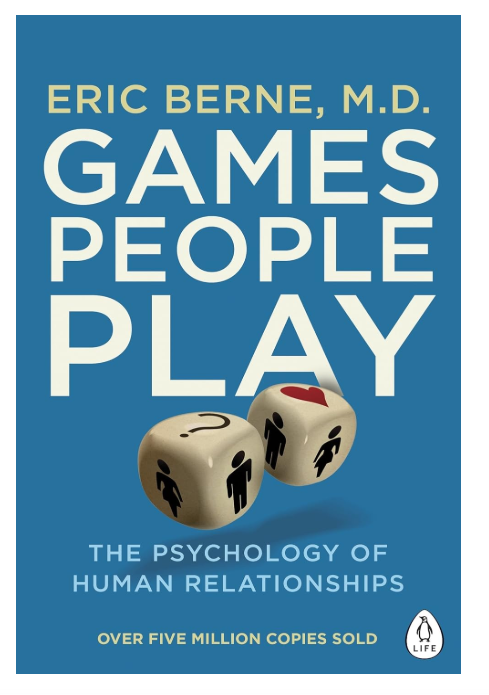
Human relationships are often far more complex than they appear on the surface. Beneath our everyday conversations lie hidden psychological patterns that influence how we think, feel, and interact with others. In his groundbreaking book Games People Play: The Psychology of Human Relationships, Eric Berne reveals these invisible patterns and explains why people repeatedly engage in predictable emotional “games.”
More than fifty years after its publication, this classic remains one of the most influential books on psychology, communication, and self-awareness. Berne’s insights continue to help readers understand relationships, improve communication, and break free from destructive behavioral cycles.
If you’re interested in understanding human behavior and improving your relationships, this book deserves a place on your reading list.
👉 Grab your copy here: https://amzn.to/3PTDSKK
About the Author: Eric Berne
Eric Berne was a Canadian-born psychiatrist and psychoanalyst best known for developing Transactional Analysis (TA), a revolutionary theory of personality and communication.
Rather than viewing human behavior as random, Berne believed that people interact according to predictable psychological patterns. His work made complex psychological concepts accessible to ordinary readers, allowing people to better understand themselves and those around them.
His book Games People Play became an international bestseller and transformed the way people think about relationships.
What Is Transactional Analysis?
At the heart of Berne’s work is the concept of Transactional Analysis.
According to Berne, every person operates from one of three psychological states:
1. Parent
The Parent ego state contains attitudes, rules, judgments, and behaviors we learned from authority figures during childhood.
Examples include:
- “You should work harder.”
- “That’s not the right way to do it.”
- “Always be careful.”
The Parent can be nurturing or critical.
2. Adult
The Adult ego state is rational, objective, and focused on facts.
Examples include:
- Gathering information.
- Solving problems logically.
- Making decisions based on evidence.
Healthy communication often occurs when both people interact from their Adult state.
3. Child
The Child ego state contains emotions, creativity, impulses, and reactions developed during childhood.
Examples include:
- Excitement
- Fear
- Rebellion
- Playfulness
The Child is responsible for much of our emotional experience.
Understanding these three ego states provides a powerful framework for analyzing everyday interactions.
What Are Psychological Games?
Berne defines psychological games as recurring patterns of behavior that people unconsciously engage in to achieve hidden emotional rewards.
These games often appear innocent at first but eventually lead to predictable negative outcomes.
The participants may not even realize they are playing.
Common characteristics of psychological games include:
- Repetitive interactions
- Hidden motives
- Emotional manipulation
- Predictable endings
- Negative feelings afterward
People continue playing these games because they satisfy unconscious emotional needs.
Why Do People Play Games?
According to Berne, people play psychological games because they provide:
Emotional Validation
Even negative attention can feel better than no attention at all.
Familiarity
Many games originate in childhood and become comfortable behavioral patterns.
Avoidance of Intimacy
Authentic emotional connection can feel vulnerable. Games allow people to avoid genuine intimacy.
Reinforcement of Beliefs
People often seek experiences that confirm existing beliefs about themselves and others.
For example, someone who believes “Nobody appreciates me” may unconsciously create situations that prove that belief.
Famous Psychological Games Explained
One reason the book became so popular is Berne’s fascinating descriptions of common psychological games.
“Why Don’t You… Yes But”
In this game, one person presents a problem.
Others offer solutions.
The person rejects every suggestion with a “Yes, but…”
Example:
Friend: “I’m unhappy at work.”
You: “Why not update your resume?”
Friend: “Yes, but the job market is terrible.”
You: “Maybe learn a new skill.”
Friend: “Yes, but I don’t have time.”
The hidden goal is not solving the problem. It’s maintaining the belief that no solution exists.
“See What You Made Me Do”
This game involves blaming others for one’s own mistakes or poor decisions.
Examples:
- “I failed because you distracted me.”
- “I yelled because you upset me.”
The player avoids taking responsibility while shifting guilt onto someone else.
“Now I’ve Got You”
In this game, someone waits for another person’s mistake and then attacks or criticizes them.
The satisfaction comes not from solving the issue but from proving superiority.
This pattern is common in workplaces, marriages, and family relationships.
“Kick Me”
Some individuals unconsciously invite criticism through self-defeating behavior.
When criticism arrives, it confirms their negative self-image.
The cycle repeats indefinitely unless consciously interrupted.
The Hidden Cost of Psychological Games
Although games may satisfy short-term emotional needs, they create significant long-term problems.
These include:
Damaged Relationships
Games erode trust and create emotional distance.
Poor Communication
Hidden motives prevent honest dialogue.
Increased Conflict
Many arguments are actually recurring games rather than genuine disagreements.
Emotional Exhaustion
Constant manipulation and defensiveness drain energy.
Personal Stagnation
Games prevent growth because they keep people trapped in familiar patterns.
How to Stop Playing Psychological Games
One of the most valuable lessons in the book is that awareness creates freedom.
Once you recognize a game, you can choose not to participate.
Strengthen Your Adult Ego State
Instead of reacting emotionally, pause and assess the facts.
Ask yourself:
- What is really happening here?
- What outcome do I want?
- Am I responding rationally?
Communicate Directly
Replace hidden agendas with honest communication.
Instead of manipulating, express your needs openly.
Take Responsibility
Avoid blaming others for your emotions, decisions, or outcomes.
Personal accountability disrupts many psychological games.
Set Healthy Boundaries
Not every invitation deserves acceptance.
Sometimes the healthiest response is refusing to participate.
Seek Authentic Connection
Real intimacy requires vulnerability.
Honest conversations create stronger relationships than emotional games ever can.
Lessons From Games People Play
The book offers numerous life-changing insights.
1. Most Human Behavior Is Predictable
People often repeat the same behavioral patterns throughout their lives.
2. Childhood Experiences Shape Adult Relationships
Many relationship dynamics originate in early family experiences.
3. Awareness Creates Choice
You cannot change what you do not recognize.
4. Communication Happens on Multiple Levels
Words tell only part of the story.
Hidden motivations often reveal the real message.
5. Healthy Relationships Require Authenticity
Trust grows when people communicate honestly rather than strategically.
6. Emotional Maturity Involves Responsibility
Blame keeps people trapped.
Responsibility creates freedom.
7. Self-Knowledge Improves Every Relationship
The better you understand yourself, the better you understand others.
Why This Book Remains Relevant Today
Despite being written decades ago, Games People Play feels remarkably modern.
Social media, workplace politics, family conflicts, and romantic relationships continue to showcase the same psychological patterns Berne identified years ago.
In today’s hyperconnected world, understanding human behavior is more valuable than ever.
The book helps readers:
- Improve emotional intelligence
- Build healthier relationships
- Communicate more effectively
- Recognize manipulation
- Develop self-awareness
- Break unhealthy behavioral cycles
Its principles remain timeless because human nature hasn’t changed.
Who Should Read This Book?
This book is ideal for:
- Psychology enthusiasts
- Leaders and managers
- Teachers and educators
- Counselors and coaches
- Parents
- Students
- Anyone interested in personal development
Whether you’re trying to improve your marriage, strengthen friendships, become a better leader, or simply understand people more deeply, Berne’s insights can provide tremendous value.
👉 Get your copy of Games People Play here: https://amzn.to/3PTDSKK
Final Thoughts
Games People Play is more than a psychology book. It’s a mirror that reveals the hidden patterns influencing our everyday interactions.
Eric Berne’s concept of Transactional Analysis provides a practical framework for understanding communication, relationships, and human behavior. The book encourages readers to move beyond unconscious games and develop healthier, more authentic connections.
The greatest lesson may be this: when we understand the invisible scripts driving our behavior, we gain the power to rewrite them.
If you’re looking for a book that will change how you view conversations, relationships, and yourself, Games People Play is an excellent place to start.
Ready to discover the hidden psychology behind human relationships?
📚 Order the book today: https://amzn.to/3PTDSKK
Must-Read Book Summaries You’ll Love
If leadership, mindset, influence, and personal growth fascinate you, don’t stop here. These hand-picked book summaries from our blog dive deeper into psychology, success, motivation, power, and timeless wisdom—each packed with practical takeaways you can use immediately:
Discover the psychology behind why people say “yes” and how ethical persuasion can transform leadership and decision-making.
Learn the life-changing power of seeing the world as it truly is, backed by data, logic, and optimism that reshapes how leaders think.
A deep dive into Daniel H. Pink’s revolutionary ideas on motivation—and why autonomy, mastery, and purpose matter more than rewards.
Explore how vulnerability becomes strength, helping leaders build trust, courage, and wholehearted living in both work and life.
A timeless guide to living in the present moment, reducing stress, and unlocking inner clarity—essential for mindful leadership.
An inside look at the mind of a visionary who is reshaping the future through relentless ambition, innovation, and risk-taking.
A bold exploration of power, politics, and leadership realities, offering lessons that remain surprisingly relevant today.
Master timeless strategies for winning—not just in war, but in business, leadership, and everyday challenges.
Uncover the money lessons schools never taught you, and reshape how you think about wealth, assets, and financial freedom.
The 7 Habits of Highly Effective People by Stephen R. Covey
A classic blueprint for personal effectiveness, leadership excellence, and long-term success that never goes out of style.
- Why Explore These Book Summaries?
- ✔ Quick insights from bestselling books
- ✔ Practical lessons for leadership & growth
- ✔ Easy-to-read, human-written summaries
- ✔ Perfect for lifelong learners & leaders
👉 Bookmark these reads and keep sharpening your leadership edge.
“Start Your Website Journey Today – Exclusive Hostinger Discounts!”